

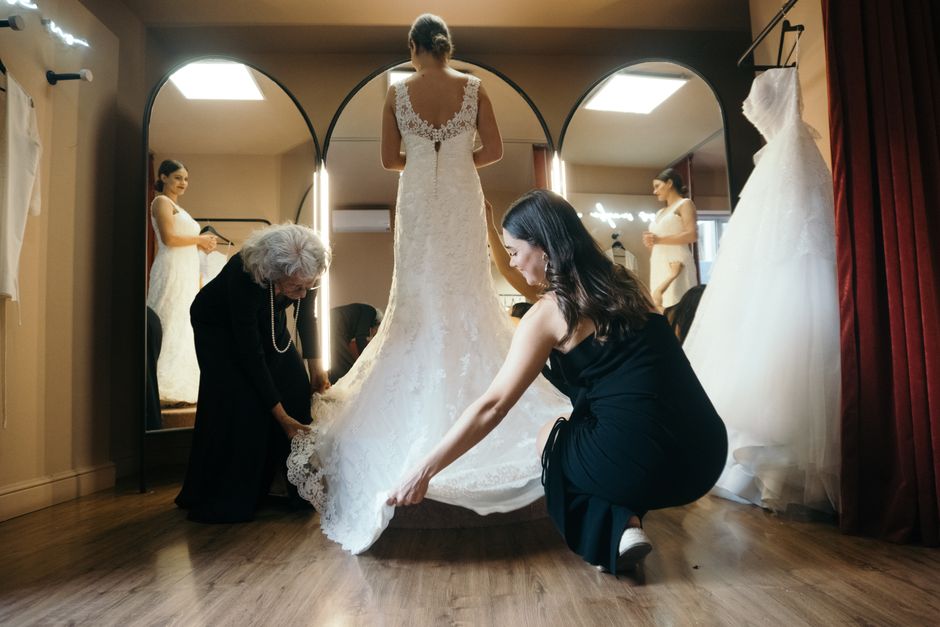
Wedding Gown Fittings: Find Your Perfect Match
The Essential Timeline for wedding gown fittings
Wedding gown fittings are the step-by-step appointments where your dress is adjusted to fit your body perfectly — and they’re one of the most important parts of your entire bridal journey.
Here’s a quick overview of what to expect:
| Step | When | What Happens |
|---|---|---|
| Order your gown | 12-18 months before | Choose your dress; production begins |
| Gown arrives | 4-6 months before | Your dress is ready for fitting |
| First fitting | 8-12 weeks before | Initial adjustments; bodice and hem pinned |
| Second fitting | 6-8 weeks before | Adjustments checked; movement tested |
| Final fitting | 1-3 weeks before | Last checks; bustle confirmed; dress pressed |
Almost every wedding gown needs some level of adjustment before it’s truly ready to wear. Dresses are made to standard sizing — not to your exact measurements — so the fitting process is what transforms a beautiful gown into your gown.
Most brides attend two to three fitting appointments, each lasting around 45 to 60 minutes. Starting the process about two to three months before your wedding day gives you plenty of time for a stress-free experience.
I’m Brie Veliz, owner of Theory Bridal House in Orlando, and my background as a bridal stylist — including years of hands-on experience guiding brides through wedding gown fittings — is what inspired me to create a boutique where every detail of this process feels personal and unhurried. Let’s walk through everything you need to know to feel confident and ready for your big day.
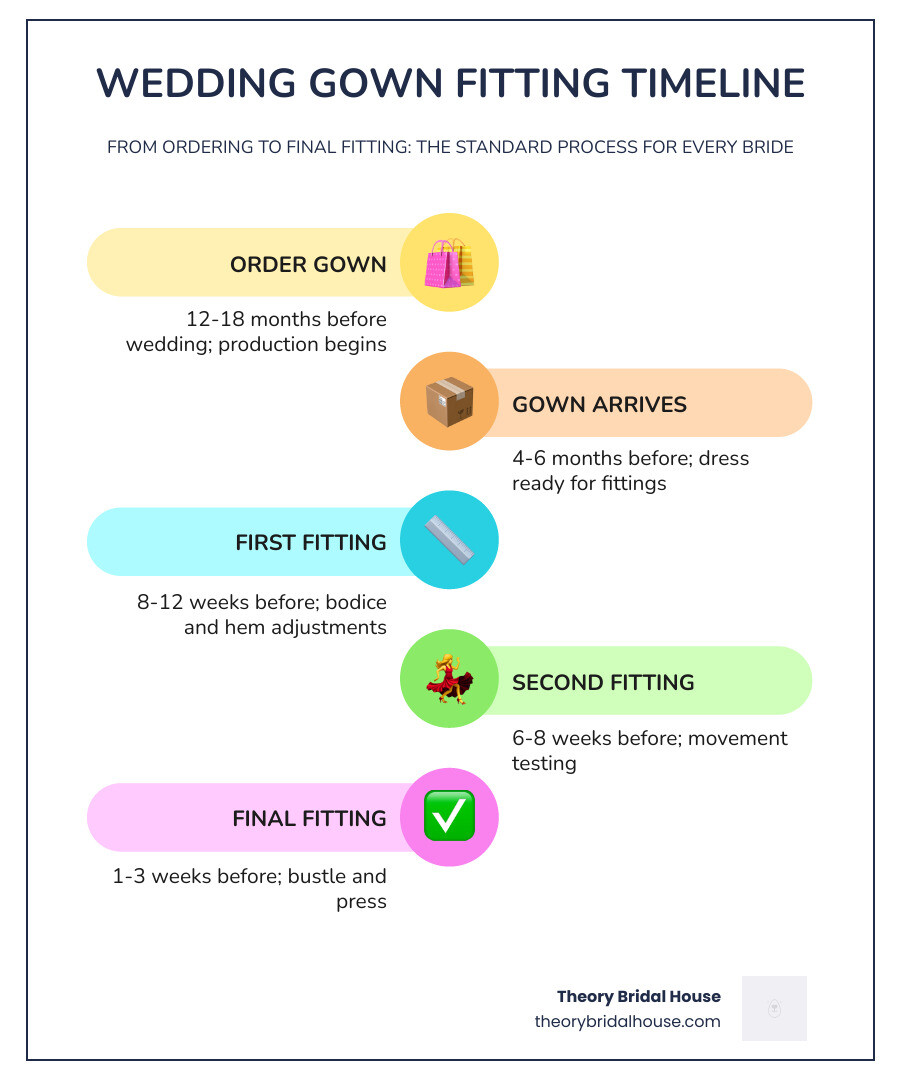
Timing is everything when it comes to bridal fashion. As we look ahead to May 2026, the planning cycle remains a marathon, not a sprint. To ensure you aren’t rushing through one of the most sentimental parts of your wedding preparation, you need to understand the logistics of how a gown actually makes it from the designer’s atelier to your front door in Central Florida.
Most brides should begin their shopping journey approximately 12 to 18 months before the wedding. This might seem early, but most designer gowns take 4 to 6 months—and sometimes up to 9 months—to arrive after the order is placed. These dresses are often made-to-order, meaning the fabric isn’t even cut until your deposit is down.
Once your dress arrives at our boutique, the real magic of wedding gown fittings begins. You should aim to start the actual fitting and tailoring process about 2 to 3 months (8 to 12 weeks) before your wedding date. This window allows for the standard three appointments while leaving a “buffer” for any last-minute weight fluctuations or complex custom additions.
If you are planning a wedding in Orlando, Sanford, or Winter Park for 2026, peak seasons (spring and fall) see a surge in appointments. Booking your slot early is the best way to ensure you get the attention your gown deserves.
Book Your Consultation at Theory Bridal House
What to Expect During Your Three wedding gown fittings
The transformation of your gown happens in stages. It’s a collaborative process between you and the tailoring artisan. Each appointment has a specific goal to ensure that by the time you walk down the aisle, you aren’t just wearing a dress—you’re wearing a masterpiece.
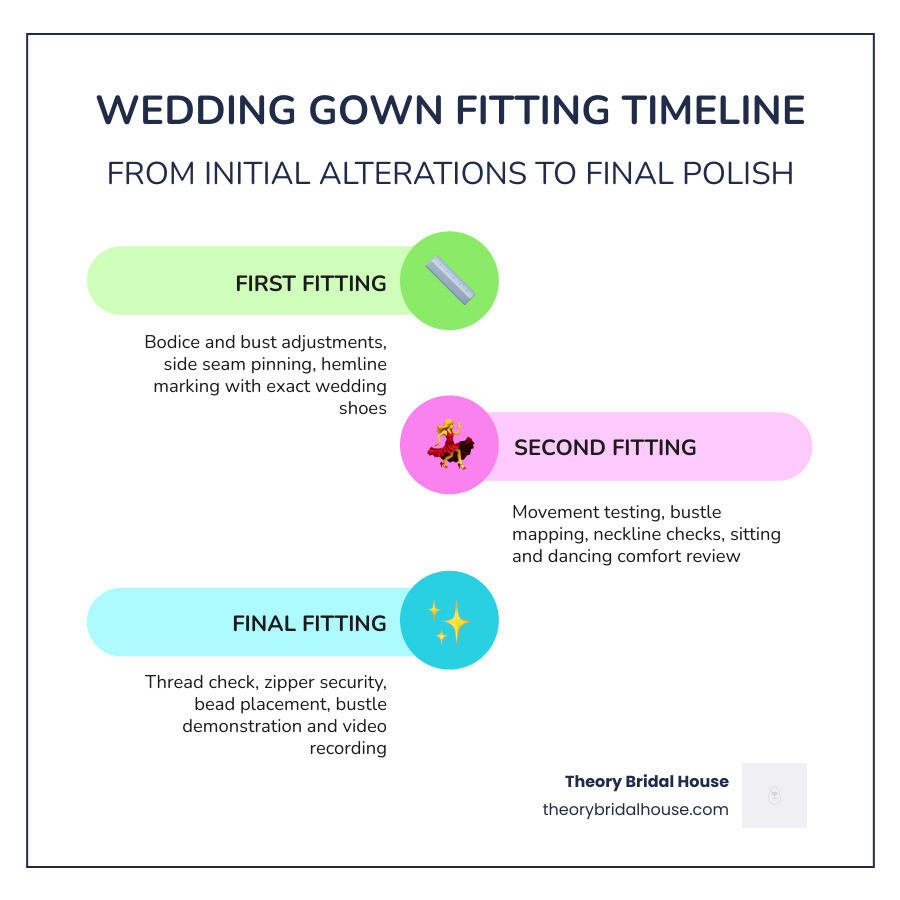
The First Fitting (8-12 Weeks Out) This is the most technical of the wedding gown fittings. Your tailor will focus on the “bones” of the dress. Typically, they start with the bodice, pinning the side seams and adjusting the bust to ensure the structure supports you perfectly. They will also pin the hemline. This is why having your exact shoes is vital; even a half-inch difference in heel height can throw off the entire drape of the skirt.
The Second Fitting (4-6 Weeks Out) By now, the major structural work is done. You’ll start to see the dress taking its true shape. This appointment is all about movement testing. Can you sit? Can you breathe? Is the neckline sitting flush against your skin? This is also when we typically begin mapping out the bustle—that magical system of buttons or ties that lifts your train so you can dance.
The Final Fitting (1-2 Weeks Out) This is the “Aisle Ready” moment. We do a final check for loose threads, secure zippers, and ensure every bead is in place. We also use this time to teach your “designated dresser” (usually a bridesmaid or your mom) how to work the bustle. We recommend taking a video of this process so there’s no fumbling on the wedding day!
Preparing for Your First Appointment
Walking into your first fitting can feel a bit nerve-wracking, but being prepared makes all the difference. Think of this as a “dress rehearsal” for the technical side of your wedding day. To get the most out of your wedding gown fittings, you need to bring the “foundation” of your look.
First and foremost: your shoes. Whether you’re wearing 4-inch stilettos or custom sneakers, the height of your heel dictates where the hem is pinned. If you don’t have your exact shoes yet, bring a pair with the identical heel height.
Secondly, undergarments are non-negotiable. The shapewear or bra you wear during the fitting will change how the fabric sits on your body. We recommend nude, seamless undergarments that won’t show through delicate crepe or lace. If your gown has a built-in corset, you might not need a bra at all, but you’ll want to confirm this during the first session.
We also suggest keeping your makeup minimal to avoid any accidental transfers onto the pristine fabric. However, having your hair in a similar style to your planned wedding “updo” or “down-do” can help you visualize how the neckline and veil will look together.
For a complete list of what to pack in your “fitting kit,” check out this Test Drive Your Dress: A Wedding Dress Fitting Checklist.

Mastering the Bustle and Final Adjustments
The bustle is perhaps the most misunderstood part of the wedding gown. Essentially, it’s a custom-engineered system that lifts and secures your train so it doesn’t drag on the floor during the reception. Since every gown is constructed differently—from the airy layers of Ana in Miles by Wtoo by Watters to more structured silhouettes—the bustle must be custom-made for your specific dress.
There are several types of bustles, including:
- The American (Over) Bustle: The train is lifted and fastened to the outside of the gown.
- The French (Under) Bustle: The fabric is tucked under itself, creating a beautiful tiered look.
- The Ballroom Bustle: The train is tucked into the dress entirely, making it look like a floor-length gown with no train.
During your wedding gown fittings, don’t just stand still. You need to “test drive” the dress. Practice sitting down (especially if you have a fitted mermaid style), lifting your arms to imagine hugging guests, and doing a quick “spin” to see how the fabric moves. If you find it hard to breathe or move, tell your seamstress immediately. A good fit is a balance between looking skin-tight and actually being able to eat your wedding dinner!
View Our Gown Collection
Featured Gowns for Your Upcoming wedding gown fittings
Every gown has its own “personality” when it comes to the fitting process. Some require intricate lace matching, while others focus on sleek, architectural seams. Here are some of our favorite styles currently trending for 2026:
- Susie in Drew by Maggie Sottero: A classic silhouette that benefits from precise bodice tailoring to highlight the waist.
- Blake in Elysian Bridal: This gown’s modern lines require an expert eye to ensure the hem falls exactly a quarter-inch above the floor.
- Candace in Mira by Evie Young: Perfect for the boho bride, where movement and comfort are the top priorities during the second fitting.
- Lauren in Greenly by Maggie Sottero: Delicate floral appliqués might need to be hand-moved and re-secured after the side seams are taken in.
- Cristina in Somerset by Wtoo by Watters: A dreamy, voluminous skirt that requires a sturdy bustle to handle the weight of the fabric during the party.
- Tatiana in Cali by Eddy K: Sophisticated and sleek, this gown demands a flawless fit through the hips and seat.
Trending Silhouettes for 2026:
- Fit and Flare: Accentuates curves while allowing room for dancing.
- Basque Waists: A vintage-inspired “V” shape that elongates the torso.
- Detachable Elements: Capes, sleeves, and overskirts that require their own mini-fittings.
- Minimalist Crepe: Where every seam must be perfectly straight because there is no lace to hide imperfections.
Navigating Customization and Tailoring Costs
One of the most common questions we hear is about the investment required for professional tailoring. On average, brides spend between $350 and $700 for full wedding dress adjustments. However, this can vary significantly based on the complexity of your gown.
If you have a gown with multiple layers of horsehair trim, extensive hand-beading, or delicate lace that must be removed and sewn back on after every adjustment, the cost will be higher. Adding custom elements—like changing a neckline from a scoop to a sweetheart or adding long lace sleeves—also adds to the total.
| Feature | Standard Timeline | Rush Timeline |
|---|---|---|
| Basic Hem & Take-in | 8-10 Weeks | 2-4 Weeks (Fee Applies) |
| Complex Lace/Beading | 10-12 Weeks | 4-6 Weeks (Fee Applies) |
| Custom Design Changes | 12+ Weeks | Not Recommended |
At Theory Bridal House, we believe in transparency. We want you to feel empowered during your wedding gown fittings, knowing exactly what goes into the craftsmanship of your dress. Our partners in the Central Florida area, from Maitland to Clermont, are artisans who treat each gown with the respect it deserves.
Theory Bridal House Experience
Frequently Asked Questions about Gown Refinements
What should I do if my body changes before the wedding?
It is completely normal for your body to change during the stress and excitement of wedding planning. Most wedding gowns can be taken in up to two sizes and let out by about one size (depending on the seam allowance). The key is communication. If you notice a significant change in how your clothes fit, let your seamstress know before your next appointment. This is why we schedule the final fitting so close to the wedding day—to catch those last-minute fluctuations.
More info about real bride experiences
What happens if I start the fitting process late?
If you’re working on a tight timeline, don’t panic. While the 12-18 month window is ideal, we have solutions for every bride. You can explore in-stock wedding dresses or sample gowns that are ready to take home the same day. Some designers also offer rush-order options for an additional fee. For the fitting process itself, some specialists offer express services that can complete adjustments in a matter of weeks.
How do I choose the right tailoring specialist?
Look for someone who specializes specifically in bridal wear. A standard tailor who works on suits and jeans may not have the specialized equipment needed for delicate tulle or the structural knowledge required for heavy bridal corsetry. At Theory Bridal House, we can point you toward trusted experts in the Orlando area who understand the nuances of our specific designers, like Stephanie in Sierra by Eddy K or Bianca in Garance by Watters.
Expert Guidance at Theory Bridal House
Conclusion
Your journey to the altar is a series of beautiful moments, and your wedding gown fittings are among the most transformative. From the first time you see the pins marking your silhouette to the final moment you see yourself in the mirror, perfectly fitted and “Aisle Ready,” this process is about celebrating you.
At Theory Bridal House, located in the heart of Downtown Avalon Park, Orlando, we’ve created a space that honors this journey. We move away from the “big box” feel to offer an intimate, cozy experience where you can sip a mimosa in a private suite while we focus entirely on your vision. Whether you are coming to us from Lake Nona, Winter Garden, or right here in Avalon Park, we are dedicated to making sure your dress fits like a dream.
The magic isn’t just in the dress—it’s in the fit. We can’t wait to help you find yours.