


A Practical Guide to Comparing Bride Gown Styles
Why Comparing Bride Gown Styles Before You Shop Makes All the Difference
There are more gown silhouettes, necklines, and construction details than most brides expect. Here is a quick overview of the most common styles to know before your first appointment:
| Silhouette | Best For | Key Feature |
|---|---|---|
| A-Line | All body types | Flares gently from the waist |
| Ball Gown | Most body types | Full, dramatic skirt volume |
| Mermaid | Curves | Fitted to below the knee, then flares |
| Trumpet | Hourglass, petite | Flares at mid-thigh |
| Sheath/Column | Lean, athletic, hourglass | Skims the body straight to the floor |
| Slip Dress | All body types | Minimal, bias-cut, quiet luxury |
| Tea-Length | All body types | Hemline falls between knee and ankle |
| Bridal Suit | All body types | Tailored, non-traditional, modern |
Knowing the right words to use — A-line, basque waist, illusion back, trumpet flare — helps you communicate clearly with your stylist and make the most of your time in the salon. It also means you spend less time on styles that were never going to work for you, and more time on the ones that will.
According to research across major 2026 bridal collections, the average bride spends around $2,250 on her gown, with 21% spending $4,000 or more. That is a significant investment. Going in informed protects both your investment and your time.
I’m Brie Veliz, owner of Theory Bridal House in Orlando, and I have spent years helping brides navigate bride gown styles — first as a bridal stylist, and now running my own boutique. Let’s walk through everything you need to know so you can walk into your appointment with confidence.
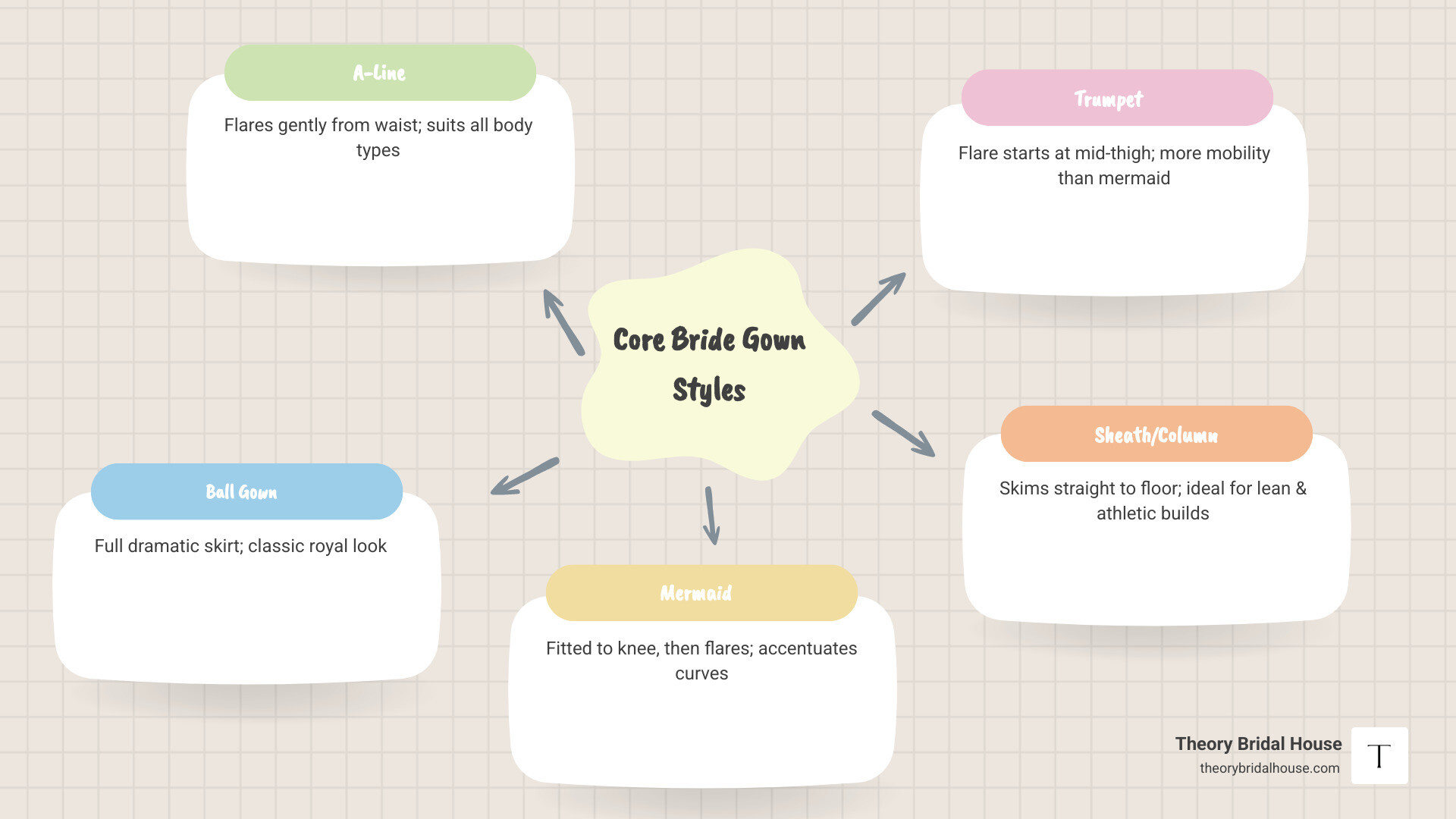
Basic bride gown styles glossary:
Core Silhouettes in Classic Bride Gown Styles
Every wedding dress begins with an underlying architecture. The silhouette establishes the overall shape, structure, and visual movement of your gown as you walk down the aisle. Understanding how these core framework choices behave structurally helps narrow down what feels natural on your body.
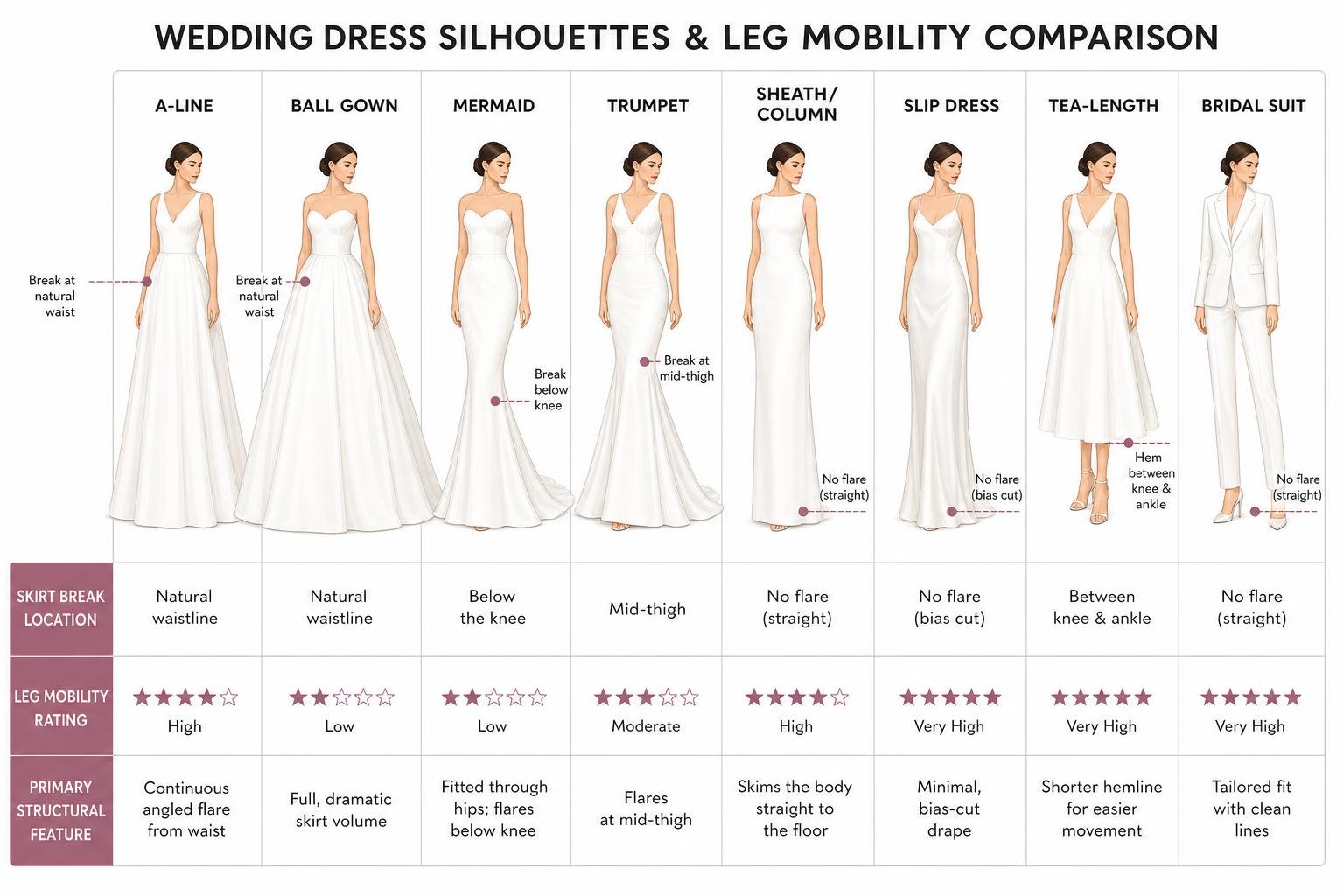
To help you visualize how silhouette architecture influences movement during your ceremony and reception, consider how skirt flare points affect mobility:
| Silhouette | Skirt Break Location | Leg Mobility Rating | Primary Structural Feature |
|---|---|---|---|
| A-Line | Natural waistline | High | Continuous angled flare from waist |
| Ball Gown | Waist or drop waist | Moderate to High | Internal crinoline or petticoat support |
| Trumpet | Mid-thigh | Moderate | Hugs hips, eases before knee |
| Mermaid | At or below the knee | Restricted | Tightly fitted through hips and thighs |
| Sheath | Floor-length drop | High | Vertical column skimming body |
A-Line and Ball Gown Architecture
The A-Line gown remains one of the most celebrated silhouettes in fashion history. Christian Dior officially named the shape in 1955 to describe a structure that fits neatly through the bust and waist before angling outward toward the floor in the shape of a capital letter “A.” Because it balances body proportions effortlessly, it is universally flattering across every shape and size.
In contrast, the classic Ball Gown relies on royal volume and grand architectural proportions. Queen Victoria popularized the dramatic white ball gown during her 1840 wedding to Prince Albert, setting a global tradition for ceremonial drama. Ball gowns feature a structured, fitted bodice—often constructed with a basque waist—that meets a full, sweeping skirt supported by crinoline layers. For deeper insights into structural gown variations, explore An Essential Guide to Bridal Gown Styles.
Comparing Mermaid vs Trumpet Bride Gown Styles
Brides looking to emphasize their curves frequently compare mermaid and trumpet cuts. While both fall under the fit-and-flare family, their architectural break points create completely different walking experiences:
- Trumpet Silhouette: Begins its flare higher up at the mid-thigh. This mid-thigh release provides an hourglass outline while granting plenty of knee mobility for walking up steps or dancing.
- Mermaid Silhouette: Popularized in haute couture by Jean Patou in the late 1920s, the mermaid cut remains tightly contoured through the bust, waist, hips, and thighs, breaking into a dramatic flare only at or below the knee.
For a deeper dive into fitted lace options, read Fit and Flare: The Ultimate Guide to Slim Fit Lace Gowns. You can also review the fascinating lineage of gown structures in this Silhouette History Guide.
Sheath, Slip Dresses, and Modern Suits
For minimalist brides, linear silhouettes offer effortless elegance:
- Sheath / Column: Skims straight down from neck to hemline without heavy skirt layers, highlighting natural stature.
- Slip Dress: Made iconic by Carolyn Bessette in 1996, the bias-cut silk slip dress delivers understated quiet luxury.
- Bridal Suit: Ever since Bianca Jagger wore a tailored white suit jacket for her 1971 wedding, sharp tailoring has offered an empowering alternative for urban, city hall, or reception looks.
Brides under 5’4″ often prefer sheaths or sleek suits to elongate their frame without overwhelming volume. Read more in The Ultimate Wedding Dress Guide for Brides Under 5’4″.
Matching Gown Silhouettes to Body Type and Venue

A gown should feel like an extension of your personality, highlighting your favourite physical attributes while working harmoniously with your venue’s environment.
Body Type Alignment for Flattering Silhouettes
Different silhouettes emphasize distinct natural proportions:
- Hourglass Figures: Fit-and-flare, trumpet, and mermaid cuts accentuate a defined waistline and balanced bust-to-hip ratio. To showcase low-back options, consult Flaunt Your Curves Finding the Perfect Fit and Flare Low Back Wedding Dress.
- Petite Frames: High-waisted A-line gowns, sheath dresses, and trumpet skirts prevent smaller frames from getting swallowed by fabric.
- Athletic and Lean Builds: Bias-cut slip dresses, sheath styles, and detailed basque waists add visual interest and gentle curve definition.
- All Body Types: A-line skirts and tailored jumpsuits offer comfort, balance, and clean proportions for everyone.
Aligning Dress Weight with Venue and Reception Needs
Matching your dress to your venue setting ensures you stay comfortable throughout your ceremony and reception:
- Grand Ballrooms: Structured silk mikado ball gowns and expansive satin trains match the architectural scale of high ceilings and formal chandeliers.
- Beach and Coastal Settings: Lightweight crepe sheath gowns, airy tulle A-lines, and unlined lace slips stay breathable against warmth and coastal winds.
- Outdoor Gardens: Tea-length hemlines or soft A-lines keep skirts elevated above damp grass and gravel walkways.
Discover the latest setting-appropriate fabrics in our breakdown of 2026 Wedding Dress Trends.
Trending Necklines, Modular Elements, and 2026 Features
Modern bridal fashion combines sculpted couture construction with versatile styling options.
Trending Necklines for Modern Bride Gown Styles
Necklines frame your face and set the tone for your upper bodice:
- Cat Eye Strapless: A modern evolution of the classic sweetheart, featuring sharp, angular points at the bustline.
- Notched Sweetheart: Features a distinct vertical cutout at the center bust paired with supportive inner corsetry.
- Exposed Boning & Illusion Panels: Visible sheer corset boning offers modern structure while soft cap sleeves add delicate coverage. Discover more in Why We Are Head Over Heels for Cap Sleeve Fitted Wedding Gowns.
The Rise of Modular Gowns, Overskirts, and Sleeves
Modular elements allow brides to enjoy two distinct looks without buying two separate dresses:
- Detachable Overskirts: A voluminous satin overskirt worn over a fitted trumpet gown provides aisle drama during the ceremony, then detaches in minutes for dancing.
- Removable Sleeves: Draped tulle off-the-shoulder straps or romantic puff sleeves easily detach for late-night movement.
To learn how modular gowns are shaping modern design, view the 2026 Silhouette Guide.
How to Select Timeless Designs and Avoid Fading Trends
When reviewing your wedding photography decades down the line, a timeless silhouette built on clean construction will always hold its charm.
What Trends Are Fading Out in 2026
Certain high-maintenance aesthetic details are stepping back in favor of effortless sophistication:
- Optical White Fabrics: Ultra-stark white is being replaced by softer, richer shades like warm ivory, champagne, and subtle blush.
- Excessive Rhinestone Coverage: Heavy, all-over bedazzling is giving way to delicate pearl accents and botanical 3D floral appliqués.
- Overly Stiff Mermaid Boning: Extremely rigid mermaid cuts are shifting toward softer, wearable fit-and-flare skirts.
Review timeless gown collections in our Maggie Sottero Dresses Guide 2026.
Choosing Single-Trend Gowns for Photo Longevity
To keep your wedding photos from feeling attached to a single year, follow the “one trend” rule: choose a dress that features a single fashion-forward detail—such as a basque waistline, subtle bow, or 3D floral touch—anchored by classic tailoring and natural silk fabrics.
Explore bespoke options in Luxury Personalized Wedding Gowns.
Timeline and Preparation for Ordering Your Dream Gown
Finding the perfect gown takes planning, especially when ordering made-to-measure styles crafted in specialized European or American ateliers.
Made-to-Measure Ordering Lead Times
Made-to-measure gowns typically require four to six months for production and hand embroidery, plus shipping and final styling adjustments. Allowing 8 to 10 months total ensures every layer falls flawlessly. Tailoring and garment adjustments typically take two separate sessions: the first session takes place 2 to 3 months before the wedding, and the second session occurs 2 to 3 weeks before the wedding.
Learn how to prepare for your shopping journey in The Ultimate Guide to Personalized Wedding Dress Shopping.
Scheduling Shopping Milestones
We recommend booking your initial boutique dress appointment at least 9 to 12 months in advance. This allows ample time to:
- Try on various bride gown styles without feeling rushed.
- Place your order within standard designer production windows.
- Coordinate custom modifications or accessories effortlessly.
Explore leading designer options in The Complete Guide to Pronovias Wedding Dress Options.
Frequently Asked Questions About Bride Gown Styles
What is the difference between a mermaid and a trumpet silhouette?
A trumpet gown flares out at the mid-thigh, offering easier knee movement. A mermaid dress fits snugly down to or below the knee before breaking into a dramatic flare.
How do I choose a wedding dress style for my venue theme?
Match your fabric weight and silhouette volume to your setting: grand ball gowns excel in ornate ballrooms, while lightweight sheaths and soft A-line skirts thrive in beach, garden, or destination venues.
How far in advance should I book my dress shopping appointment?
You should book your bridal shopping appointment at least 9 to 12 months in advance to accommodate made-to-measure production schedules and personalized styling consultations.
Conclusion
Finding your ideal dress should feel exciting, celebratory, and completely unique to you. At Theory Bridal House in Downtown Avalon Park, Orlando, we offer an intimate, personalized shopping experience in cozy private suites, complete with complimentary mimosas as you discover your dream look.
Whether you visit us from nearby Winter Park, Lake Nona, Windermere, or anywhere across Central Florida, our dedicated stylists are here to guide you through every silhouette and fabric.
Ready to begin your gown journey? Book a Bridal Gown Appointment with us today!