

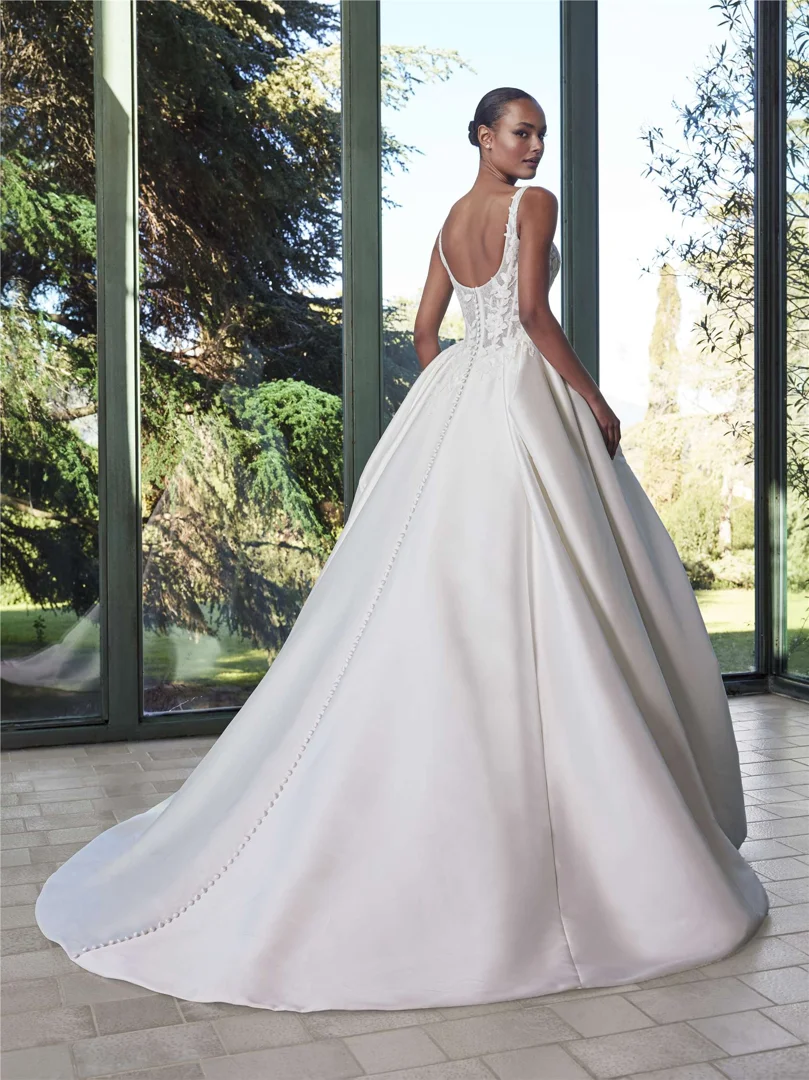
Beginner’s Guide to Finding Affordable Wedding Gown Dresses
Your Complete Guide to Finding the Perfect Wedding Gown Dresses
Wedding gown dresses are one of the most personal purchases you’ll ever make — and with thousands of styles, fabrics, and price points out there, it can feel overwhelming fast.
Here’s a quick overview of what to know before you start shopping:
- Investment: The average U.S. wedding dress costs around $1,800, but prices range from under $500 to over $10,000
- Timeline: Start shopping 9–12 months before your wedding date to allow time for ordering and two rounds of adjustments
- Silhouette: A-line is the most popular choice (worn by ~40% of brides) and flatters nearly every body type
- Color: White and ivory account for about 99% of bridal gown choices; ivory tends to be the warmer, more universally flattering option
- Fabric: Match your fabric to your season and venue — lightweight textiles for outdoor summer weddings, structured fabrics for indoor winter ceremonies
- Customization: Many gowns offer detachable sleeves, lace-up backs, and solid vs. sheer bodice options for a personalized look
The process doesn’t have to be stressful. Breaking it into clear steps — style, fabric, color, accessories — makes the whole experience much more enjoyable.
I’m Brie Veliz, founder of Theory Bridal House in Orlando, Florida, and I’ve spent years as a bridal stylist helping brides find wedding gown dresses that make them feel genuinely excited for their big day. Whether you’re just starting to browse or ready to try on gowns, this guide will walk you through everything you need to know.
Essential Steps to Selecting Wedding Gown Dresses
Finding the right gown is a memorable milestone, and setting up a structured shopping schedule early on keeps decision fatigue at bay. On average, brides visit 3 to 5 bridal boutiques before discovering “the one.” By taking systematic steps, you give yourself the freedom to evaluate silhouettes, feel fabrics in person, and make choices without feeling rushed.
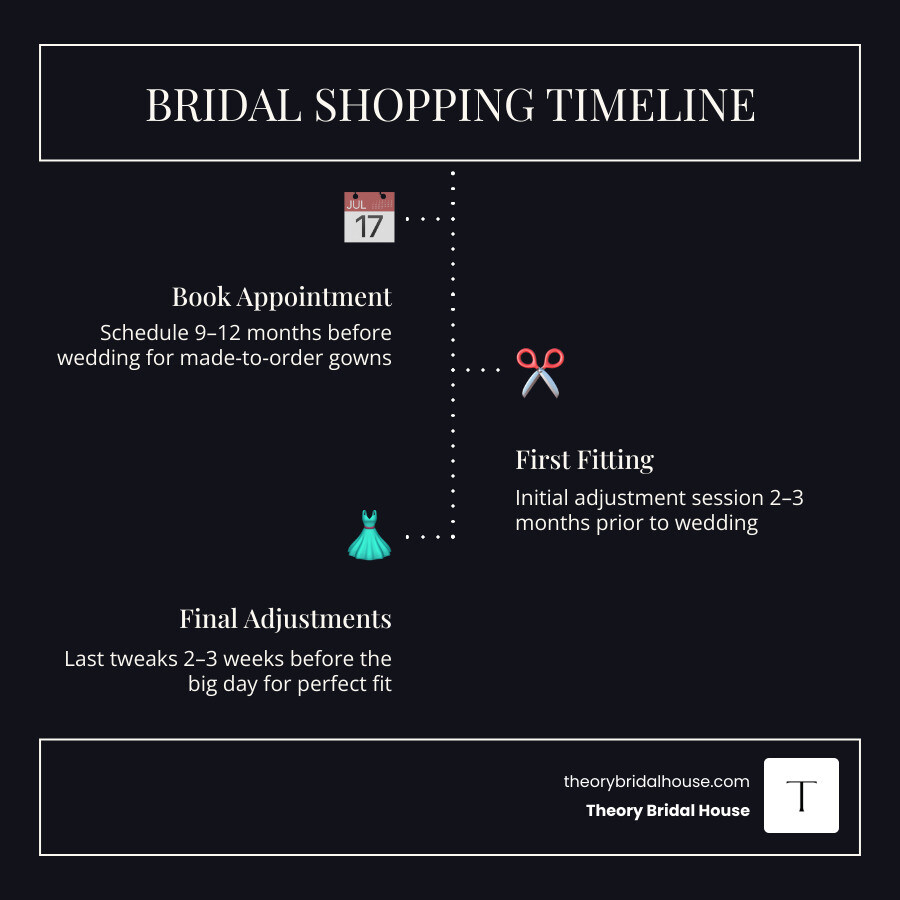
Appointments should be booked at least 9 – 12 months in advance. Because high-quality gowns are made to order, designers require standard lead times for creation and shipping. Once your gown arrives at our boutique, you will plan for two tailored adjustment sessions to guarantee a flawless finish:
- First adjustment session: Scheduled 2 to 3 months prior to the wedding date to establish precise hem length and bodice shaping.
- Second adjustment session: Scheduled 2 to 3 weeks prior to the wedding date for final tweaks and bustle setup.
Understanding the foundational shapes before your first salon visit makes comparing styles far easier. For a deeper look at classic silhouettes and construction details, explore An Essential Guide to Bridal Gown Styles.
Establishing Shopping Schedule and Financial Spending Strategy
While the average price of a bridal gown in the United States sits around $1,800, options span anywhere from under $500 for minimalist ready-to-wear designs to over $10,000 for intricate custom couture. Globally, the bridal market reached roughly $60 billion in 2023 and continues to expand at a 5.2% compound annual growth rate toward 2030, bringing an ever-widening variety of designs to modern brides.
To keep your search clear and focused:
- Establish a clear spending limit prior to browsing to protect yourself from falling in love with a design outside your comfort zone.
- Account for extras, including headpieces, veil options, specialized undergarments, footwear, and post-purchase preservation.
- Limit your shortlist to 3 to 5 strong dress candidates during early appointments so you maintain focus without overwhelming your senses.
If you are exploring local salons in Central Florida, browsing curated registries such as Bridal Salons With Prices in Maitland, FL can help you gauge regional offerings and store specializations.
Identifying Personal Style Preferences
Your personal style on your wedding day should reflect what already makes you feel poised, strong, and confident in everyday life. Rather than trying to transform into a completely different aesthetic, look at the cuts, necklines, and details that already bring out your best self.
Start by ruling out silhouettes or necklines you instinctively dislike. If high necklines make you feel restricted, focus on sweetheart, scoop, or plunging necklines. If dramatic volume feels too heavy, pivot toward sleek fit-and-flare or sheath options. To streamline your boutique visit and prepare your vision board, read The Ultimate Guide to Personalized Wedding Dress Shopping.
Navigating Silhouettes and Body Types
Choosing a silhouette is about framing your frame in a way that feels natural and striking. Every body shape can wear multiple gown styles, but knowing how each cut distributes weight and draws the eye helps pinpoint your favorite look.
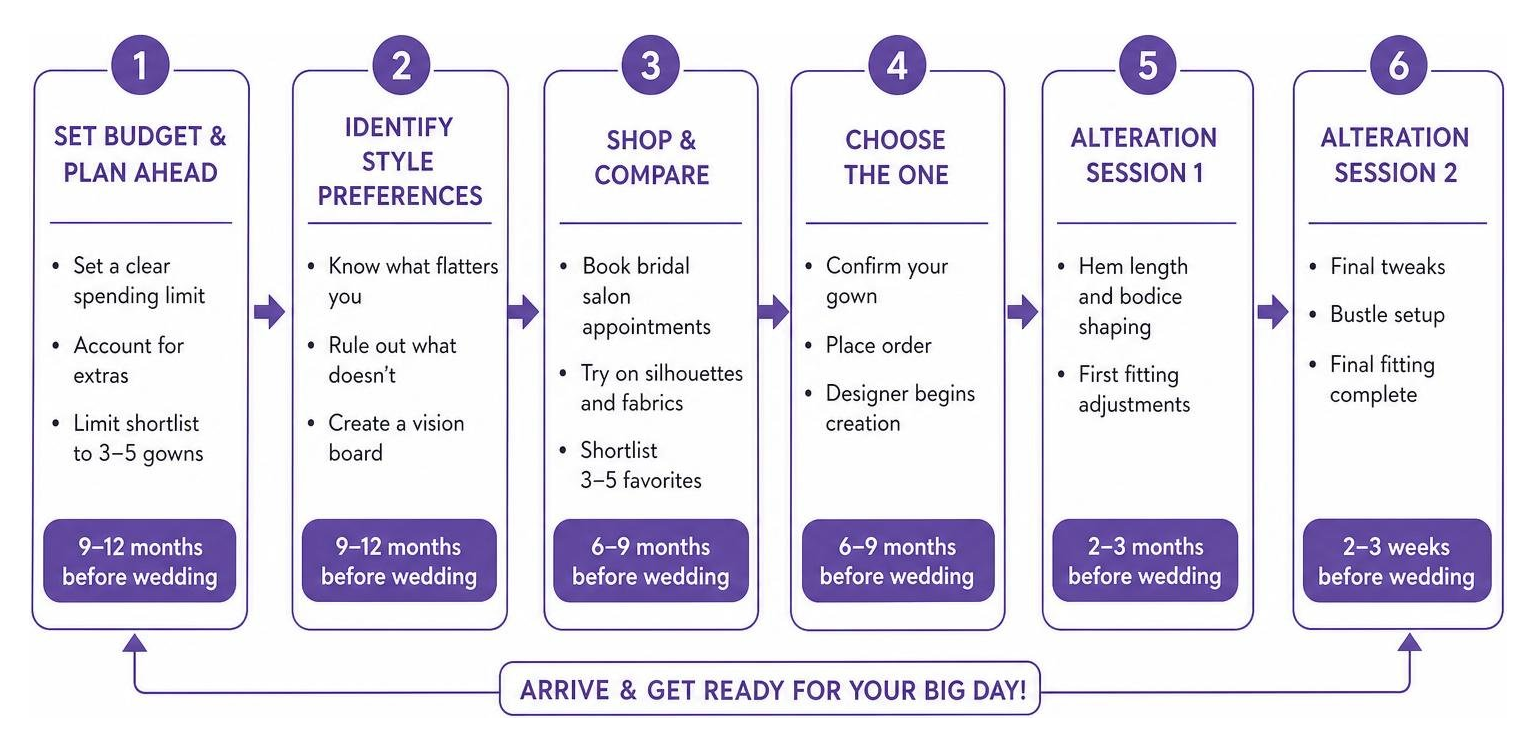
- A-Line: The undisputed favorite among brides (~40% market share). Fitted through the bust and waist before flowing gently outward into an ‘A’ shape, it offers universal balance for all body proportions.
- Ball Gown: Chosen by roughly 25% of brides, this iconic silhouette relies on a fitted bodice paired with a full, voluminous skirt, creating classic ceremonial drama.
- Fit-and-Flare / Mermaid: Selected by 20% of brides, these figure-hugging cuts contour close through the chest, waist, and hips before flaring outward around the mid-thigh or knee.
| Silhouette | Key Design Characteristics | Ideal Body Types / Visual Impact | Popular Fabric Pairings |
|---|---|---|---|
| A-Line | Fitted waist, gradual skirt expansion | Universally flattering; balance for hips and shoulders | Chiffon, organza, lace, tulle |
| Ball Gown | Sculpted bodice, maximum skirt volume | Elongates torso; creates romantic hourglass drama | Satin, tiered tulle, crisp mikado |
| Fit-and-Flare | Form-fitting through hip, flares above/at knee | Highlights natural curves; creates sleek line | Beaded overlace, stretch crepe, glitter tulle |
High-Low and Fit-and-Flare Options for Wedding Gown Dresses
For brides seeking high visual impact combined with ease of movement during reception dancing, fit-and-flare styles deliver remarkable versatility. Gowns like the Fit and Flare Wedding Dress with Beaded Lace | Sophia Tolli Esme Y3224 showcase how textured overlace and glitter tulle add shimmer without adding bulk.
To learn more about sculpted slim-cut lace options, explore Fit and Flare: The Ultimate Guide to Slim Fit Lace Gowns and Flaunt Your Curves: Finding the Perfect Fit and Flare Low Back Wedding Dress.
If you want an unconventional edge that highlights show-stopping footwear, high-low hemlines give a modern twist to traditional bridal lines. Learn about cropped hem details in High Low Wedding Dress Styles for the Fashion-Forward Bride.
Flattering Styles for Petite and Curvy Shapes
Specific structural features can dramatically accentuate different body proportions:
- Basque Waistlines: Formed by a subtle V-shape at the center waist, basque waists visually lengthen the torso and cinch the midsection. Designs like the Princess Ball Gown Wedding Dress with Sweetheart Neckline | Sophia Tolli Addison Y3248 showcase how a basque waist combines royal elegance with structure.
- Petite Framing: Brides under 5’4″ often benefit from continuous vertical lines, high-waisted designs, or gentle A-line skirts that avoid truncating the leg line. Check out The Ultimate Wedding Dress Guide for Brides Under 5’4″ for specialized petite styling ideas.
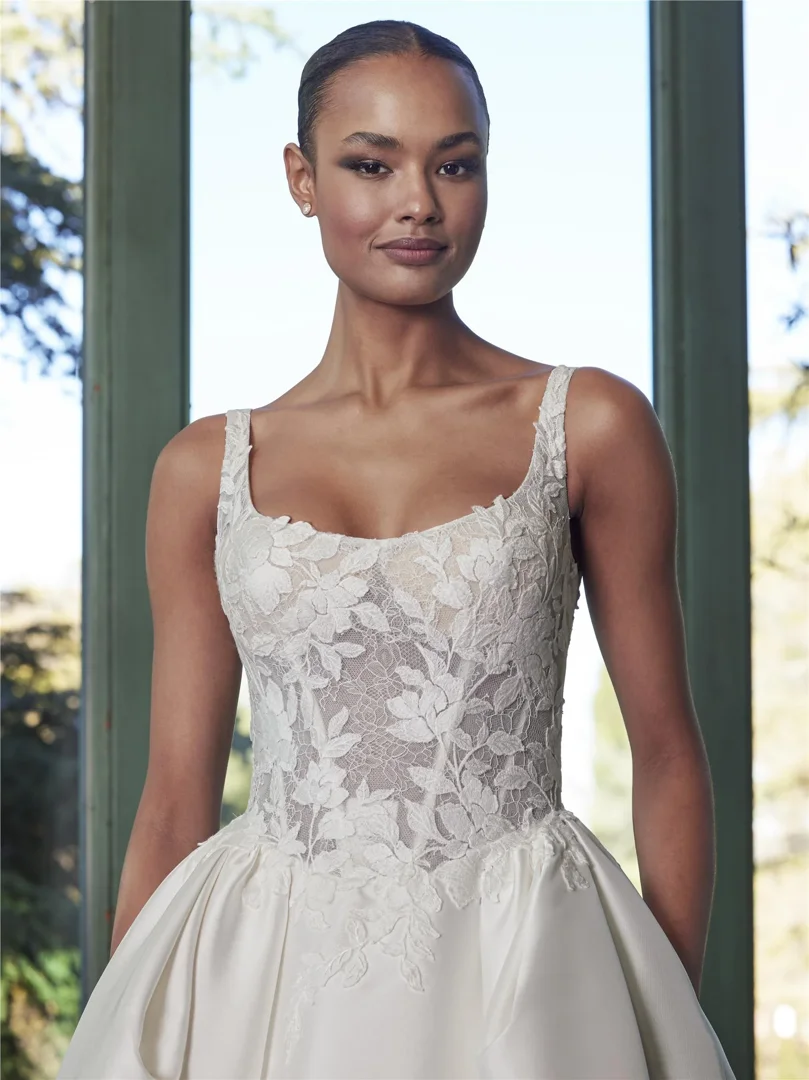
- Curvy Sculpting: Detailed lace overlays, internal corset boning, and supportive scoop necklines give curvy brides total confidence. Designs such as the Chandra – Toi Couture Exclusive Wedding gown highlight Chantilly lace textures tailored for fuller silhouettes across size ranges 0 to 32.
Matching Fabrics and Venue Environments
The environment where you say your vows plays a huge role in how comfortable you will feel in your dress throughout the day. Fabric weight, texture, and breathability should always match your venue setting and seasonal climate.
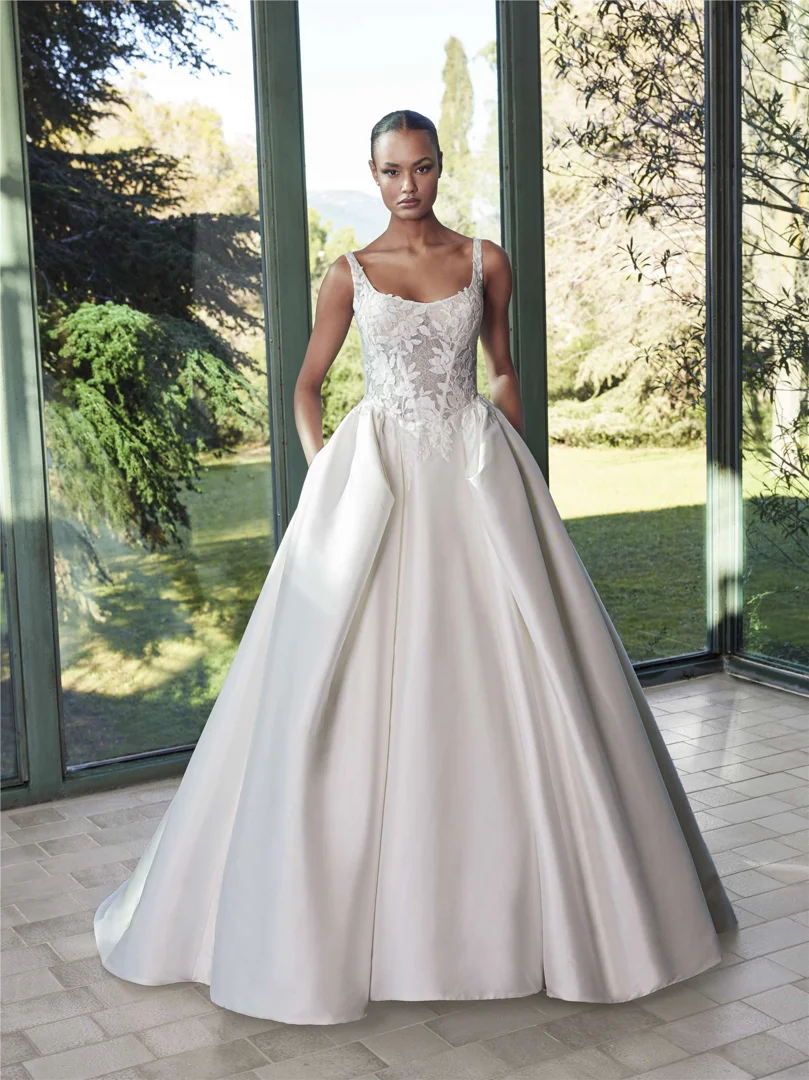
When selecting textiles, review The Ultimate Guide to Bridal Fabric Shops to understand how different weaves react to moisture, movement, and indoor light.
Summer Breathability and Lightweight Textiles
Outdoor ceremonies in warm environments (such as June garden weddings or beachside celebrations) demand light, breathable fabrics that permit natural airflow:
- Chiffon: Incredibly lightweight and airy with a matte finish, ideal for destination weddings.
- Chantilly Lace: Soft, delicate lace with detailed floral motifs that lays comfortably without trapping heat.
- Tulle & Organza: Provide airy, ethereal volume while keeping overall garment weight low.
Structured Textiles for Indoor and Winter Ceremonies
Formal indoor venues, grand ballrooms, and winter dates pair beautifully with rich, substantial materials that hold crisp geometric lines:
- Satin & Mikado: Offer structured elegance and sleek sheen, seen in royal-inspired ball gowns.
- Tiered Tulle: Skirts trimmed with horsehair ribbon hold dramatic shape and graceful bounce, as seen in the Tiered Tulle Ball Gown Wedding Dress with Lace-Up Back | Sophia Tolli Josie Y3242SBLB.
- Beaded Lace & Velvet Accents: Provide sparkle and insulation for cooler ambient temperatures.
Exploring 2026 Color Trends and Customization Features
While traditional white and warm ivory remain the choice for roughly 99% of brides, 2026 collections introduce fresh color depth and versatile, convertible design elements.
White, Ivory, and Saturated Pink Color Palettes
Selecting your gown’s shade comes down to skin undertones and personal expression:
- Pure White: A crisp, vivid tone with cool blue undertones that pairs against dark or deeply tanned complexions.
- Warm Ivory: The most universally flattering option, offering a softer appearance that brings subtle warmth to fair, olive, and medium skin tones alike.
- Saturated & Light Pink: A light pink design allows modern brides to marry tradition with individuality, creating a playful, romantic aesthetic. When styling a pink gown, substitute stark white shoes with soft metallic, nude, or blush accessories to ensure cohesive color harmony.
Customizing Features on Wedding Gown Dresses
Modern designers embrace modular elements that let you change your look between the ceremony and reception without purchasing a second gown:
- Detachable Sleeves & Jackets: Gowns like the Princess Wedding Dress with Lace Jacket | Sophia Tolli Bree Y3221 feature removable long-sleeve lace jackets, letting you shift from full-coverage formality to a strapless sweetheart neckline in seconds.
- Lace-Up Corset Backs vs. Zipper Closures: A lace-up back adds old-world romance while allowing flexible ribcage adjustment, whereas zipper closures lined with fabric buttons offer a clean, classic profile.
- Sheer vs. Solid Bodices: Many styles offer choices between exposed boning with semi-sheer illusion lace or full solid lining to match your comfort level.
Accessorizing and Coordinating Wedding Attire
Accessories bring your entire wedding aesthetic together, acting as the finishing touches that frame your personal gown choice.
Foundation Garments, Footwear, and Jewelry
- Undergarments: Test your specialized foundation garments, invisible shapewear, or low-back bra solutions early. Ensure no seam lines or straps show under high-definition boutique lighting.
- Footwear: Purchase your wedding shoes before your first adjustment session! Even a half-inch shift in heel height alters how your gown skirt lays against the floor.
- Jewelry & Headpieces: Balance embellishments thoughtfully. If your gown boasts dense beaded lace, keep necklaces minimal and select delicate earrings. If your gown is smooth, minimalist satin, elevate the look with a bold crown or ornate veil.
Coordinating Wedding Party Attire and Guest Dress Codes
Achieving visual unity across your wedding photos comes down to thoughtful palette planning:
- Attendant Palettes: Choose secondary tones for your wedding party that complement your primary dress color (e.g., sage green or champagne accents alongside warm ivory gowns).
- Guest Dress Codes: State dress expectations clearly on formal invitations and your wedding website (e.g., Black-Tie, Formal, or Cocktail) to help guests choose suitable attire.
Frequently Asked Questions About Bridal Styles
How far in advance should bridal consultations be scheduled?
We recommend booking your initial salon consultation at least 9 to 12 months prior to your wedding date. This timeline gives manufacturers adequate opportunity to handcraft your gown to standard size specifications, leaves cushion for international delivery, and ensures ample time for your two custom adjustment sessions.
What is the difference between white, ivory, and pink gowns?
Pure white features bright, cool undertones that contrast sharply against skin. Warm ivory is slightly softer, infusing gentle cream undertones that complement virtually all skin tones. Light pink or blush offers a warm, creative alternative for brides seeking a subtle pop of modern color.
How do detachable elements enhance gown versatility?
Convertible details — such as removable lace jackets, off-shoulder straps, overskirts, or detachable lace sleeves — give you two distinct bridal looks in one gown. You can enjoy traditional coverage during solemn religious or formal ceremonies, then remove the extra layers for complete freedom of movement on the dance floor.
Conclusion
Finding wedding gown dresses should feel like a celebration from the very start. When you break down the process into clear, manageable steps — narrowing silhouettes, testing comfortable fabrics, and choosing personalized details — shopping becomes a delightful highlight of your wedding planning journey.
At Theory Bridal House in Downtown Avalon Park, Orlando, Florida, we host intimate, personalized shopping appointments designed entirely around you. Step into our cozy private suites, sip mimosas with your closest loved ones, and let our expert team guide you through a stress-free selection experience.
Ready to discover your dream gown across Central Florida? Book a Bridal Gown Appointment with Theory Bridal House today, and let us help bring your ultimate bridal vision to life!