

Cute and Practical Outfits to Wear Wedding Dress Shopping
What to Wear for a Wedding Dress Fitting (And Why It Matters)
Knowing what to wear for a wedding dress fitting can make the difference between a smooth, accurate appointment and one that leaves your stylist guessing. Here is a quick answer to get you started:
Quick Guide: What to Wear to Your Wedding Dress Fitting
| Category | What to Bring or Wear |
|---|---|
| Underwear | Nude, seamless bottoms — no lace or bright colors |
| Bra | Strapless, adhesive cups, or nipple covers |
| Shapewear | Only if you plan to wear it on your wedding day |
| Shoes | Your exact wedding shoes, or similar heel height |
| Clothing | Easy on/off — wrap dress, button-down, or loose top |
| Jewelry | Minimal — small studs and your engagement ring |
| Hair | Styled close to your wedding day plan |
| Makeup | Light and natural to avoid transfer onto the gown |
| Scent | Skip heavy perfume and self-tanner |
Your appointment lasts around 90 minutes. Every item touching your body affects how the gown sits, how the hem falls, and how the seams are placed. Getting this right from the start saves time — and stress.
Most brides have two to three fittings before their wedding day. The final one is recommended about two to three weeks before the wedding. What you wear to each appointment should stay consistent, so your stylist can make precise adjustments every time.
I’m Brie Veliz, owner of Theory Bridal House in Orlando — I started my career as a bridal stylist and have guided countless brides through exactly this question of what to wear for a wedding dress fitting. In the sections below, I’ll walk you through everything, from undergarments to shoes to guest etiquette, so your fitting feels effortless.
Shopping vs. Fitting: Why Your Attire Matters More Now
A shopping appointment and a fitting appointment are not the same thing, even though both happen around the same very important dress.
At a shopping appointment, the goal is discovery. You are trying silhouettes, fabrics, necklines, and details to see what feels like you. Sample gowns are usually not made to your measurements, and many are longer than you need. In fact, many bridal samples are designed for heights around 5’9″ to 5’11”, which is why plenty of brides shop barefoot or in socks during try-ons. If you want a broader overview of the shopping stage, this guide from The Knot is a helpful reference.
At a fitting, the goal is precision.
Now we are looking at:
- how the bodice sits
- where the waist hits
- how the skirt falls with your shoes
- whether straps stay in place
- how the gown behaves when you move, sit, and dance
That is why attire matters more at the fitting. A different bra, thicker shapewear, or even a slightly taller heel can change how the gown hangs on your body. Tiny changes create big visual differences.
Think of it this way:
- Shopping asks, “Do I love this dress?”
- Fitting asks, “Does this dress fit exactly how it needs to?”

At Theory Bridal House, we always tell brides that fittings are a little less champagne-and-mirror-moment and a little more fine-detail mode. Still exciting, just more technical. The more consistent you are with what you wear, the easier it is to get a beautiful final result.
What to Wear for Wedding Dress Fitting: The Essential Foundation
The foundation layer matters most because it sits directly under the gown. Before you think about your outer outfit, start with what is underneath.
If you are wearing a fitted crepe gown, a sleek satin style, or a dress with a low back, your base layers can show through, bunch, or shift the line of the fabric. If you are wearing a more structured style like Stephanie in Sierra by Eddy K, the right foundation helps you see the shape clearly without distractions.

Choosing the Right Undergarments for Your Wedding Dress Fitting
The safest choice is nude, seamless underwear in a tone close to your skin. Avoid lace edges, thick waistbands, bold colors, and anything with texture. White undergarments can still show under bridal fabrics, so “bridal color” is not always the best undergarment color.
For bras, keep it simple:
- strapless bra if your dress shape allows it
- adhesive cups for lower backs or open sides
- nipple covers if the gown already has enough structure
Many wedding gowns have built-in support through cups, boning, corsetry, and lining, so some brides do not need a traditional bra at all. If you are unsure, bring options. A simple fitting checklist can also help guide your prep, and we always recommend practical underlayers rather than complicated lingerie.
A few helpful rules:
- wear shapewear only if you truly plan to wear it on the wedding day
- choose lightweight, smooth shapewear rather than anything bulky
- skip special-occasion lingerie with embellishments, bows, or seams
- make sure whatever you wear is comfortable enough for standing, sitting, and breathing normally
The biggest mistake we see? A bride wears shapewear to one fitting, skips it at the next, then brings it back for the final one. That makes consistency nearly impossible.
If your gown is sleek and body-skimming, smooth underlayers become even more important. If your gown is soft and romantic, they still matter because they affect comfort and support.
Consistency Across Multiple Appointments
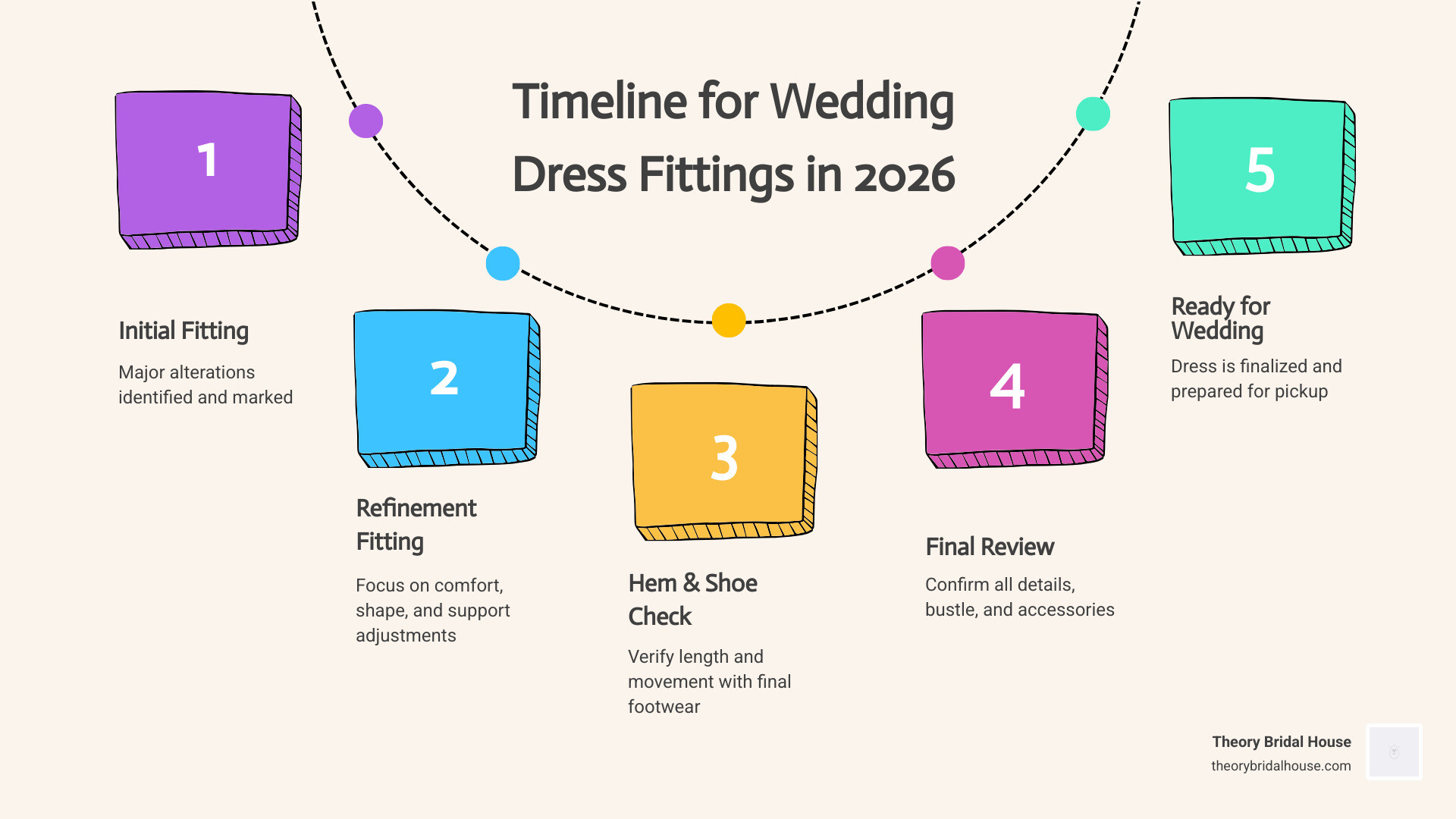
Most brides have two to three fittings. The first usually focuses on bigger fit issues, the second refines comfort and shape, and the last confirms everything is ready. Across all of them, consistency is your best friend.
Wear the same:
- undergarments
- shapewear
- heel height
- key accessories, if already chosen
If you switch between appointments, the gown can sit differently every time.
For example, a gown with contour and curve-focused structure like Candace in Mira by Evie Young will react differently to seamless briefs than to compression shorts. Even when the difference seems minor, the fit can change at the waist, hips, and hem.
A simple checklist for every fitting:
- same nude undergarments
- same support option
- same or matching-height shoes
- same hairstyle direction if neckline details matter
Footwear and Accessories: Bringing the Vision Together
Shoes are not just a styling detail. They affect posture, balance, hem length, and how the dress moves when you walk.
A gown like Bianca in Garance by Watters has a very different presence depending on whether you stand in flats or a heel. Even small differences matter.
The Importance of Wedding Day Shoes
Bring your exact wedding shoes if you already have them. If not, bring a pair with the same heel height and as close a shape as possible.
Why heel height matters:
- It changes your posture
- It affects where the hem hits the floor
- It can shift how your weight settles in the gown
- It influences how natural your walk feels
A half-inch can matter. A platform can matter. A block heel and a stiletto with the same height can still feel different on your body.
If you are deciding between heels and flats, make the decision before the final fitting if possible. The final fitting is usually recommended 2 to 3 weeks before the wedding for a reason: it allows true-to-form adjustments.
When you bring shoes, test real movement:
- Walk forward and backward
- Turn slowly
- Step as if going up stairs
- Sit and stand
- Try a few dance steps
- Check whether the hem catches at the toe
If you have not chosen your exact pair yet, choose the most realistic stand-in. Dream shoes are lovely. Accurate heel height is lovelier.
Incorporating Veils and Jewelry
Yes, bring your wedding-day accessories if you already have them.
That includes:
- veil
- hairpiece
- belt or sash
- earrings
- necklace, if you are wearing one
- any heirloom pieces that affect the neckline or overall look
Why bring them? Because accessories help us see the full picture. A cathedral veil changes the visual balance of a gown. A belt changes the waistline emphasis. Earrings and necklaces can compete with lace, beading, or a dramatic neckline.
If your dress has a statement back or neckline, a simple accessory plan may work best. If your gown is cleaner and more minimal, your accessories may do more of the styling work. A dress like Tatiana in Cali by Eddy K can look completely different once a veil and jewelry are added.
Keep jewelry minimal at the appointment itself:
- small studs
- tiny hoops
- engagement ring
- one simple bracelet if it will not snag fabric
Leave sharp-edged pieces, stacks of bangles, and oversized necklaces at home unless they are specifically part of your wedding look.
The Perfect Appointment Outfit: Practicality Meets Style
The outfit you wear to the fitting should be easy to get on and off. That is the main rule.
You do not need a dramatic “bridal appointment outfit.” You need something practical, comfortable, and uncomplicated.
Best options:
- wrap dress
- button-down shirt with easy bottoms
- loose top and pull-on skirt
- simple sundress
- slip-on shoes
A style like Brooke in Taya by Calla Blanche may require careful stepping in and out, so the less your own outfit slows you down, the better.
Choose clothing in neutral or medium tones if possible. Very dark fabrics can sometimes leave lint, and heavily embellished clothing can snag delicate materials. Also skip anything very tight or complicated, like:
- bodysuits
- shapewear layered under jeans
- outfits with lots of buttons or zippers
- anything that takes five minutes and a yoga class to remove
Your fitting may involve standing on a platform, sitting for notes, and changing more than once. Comfort matters.
What to Wear for Wedding Dress Fitting Appointments as a Guest
If someone is coming with you, their job is to support, not steal the spotlight or perfume the whole fitting room.
Guests should aim for:
- smart casual clothing
- comfortable shoes
- light layers
- simple jewelry
- non-white or non-ivory tones when possible
Most bridal appointments average about 2 to 4 guests, which tends to keep the experience focused and calm. For fittings, even fewer is often better. Usually one trusted person is plenty, especially if they will help you get dressed on the wedding day or learn the bustle.
Guests should avoid:
- bright white or ivory outfits that pull focus
- overly formal or flashy looks
- strong scents
- noisy stacks of jewelry
- clothes that make the appointment feel more like a party than a technical fitting
The same general idea applies to any close family member attending: polished, comfortable, and low-drama.
Items to Avoid Wearing
Here is the no-thank-you list for fittings:
- Heavy perfume
- Self-tanner or fresh spray tan
- Red lipstick or heavy foundation that transfers
- Dark, textured, or lace undergarments
- Sharp rings, bracelets, or necklaces that can snag
- Glitter body products
- Complicated outfits
- Brand-new shoes you can barely stand in
Perfume and beauty products are easy to forget about, but they matter. Bridal fabrics hold scent, and makeup transfer on a light gown is nobody’s favorite memory.
If you love fragrance, save it for after the appointment. Your gown will thank you.
Beauty Prep and Movement Tests
Beauty prep for a fitting should help you visualize the final look without putting the dress at risk.
That means:
- light makeup
- neat hair
- realistic styling direction
- zero products likely to transfer, stain, or shed
And once the gown is on, do not just stand there smiling at the mirror like a statue in tulle. Move.
Styling Hair and Makeup for the Full Effect
Wear your hair somewhat similar to your wedding-day plan. If you are thinking of an updo, bring a clip so you can get your hair up. If you plan to wear it down, style it in a polished version of that look.
Hair matters because it changes how you see:
- neckline shape
- straps
- shoulder details
- back details
- veil placement
A sleek gown like Blake in Elysian Bridal can feel entirely different with hair up versus loose waves.
For makeup, think “enhanced but safe”:
- light base
- neutral blush
- waterproof mascara if you are emotional
- soft lip color instead of a bold stain
- powder or setting products that reduce transfer
The goal is not full glam unless that helps you feel like yourself. The goal is to see the dress clearly while protecting the fabric.
The “Test Drive”: Sitting, Dancing, and Hugging
One of the best things you can do at a fitting is test-drive the gown. We love this idea, and a thorough fitting checklist is a great reminder that a beautiful dress also needs to work in real life.
Once your gown is pinned or adjusted, try all of this:
- walk normally
- sit down fully
- stand back up without help if possible
- raise your arms
- turn side to side
- hug someone gently
- take a few dance steps
- check how it feels at the waist, bust, hips, and thighs
- practice entering and exiting a car if the silhouette is fitted
- ask how the bustle works and record it if needed
This matters because a dress can look perfect while standing still and feel very different once the day actually starts.
During a fitting, ask yourself:
- can I breathe comfortably?
- can I sit through dinner?
- can I walk without kicking the hem?
- will I be able to hug guests?
- does anything pinch, scratch, slide, or twist?
Speak up if something feels off. Tiny discomforts become very noticeable after several hours.
Frequently Asked Questions about Wedding Dress Fittings
How many fittings are typical before the wedding?
Most brides have two to three fittings, depending on the gown and the work being done. The first usually addresses the overall fit, the second fine-tunes shape and comfort, and the final fitting confirms everything is ready. The last appointment is commonly scheduled about 2 to 3 weeks before the wedding.
Wear the same core items to each fitting so the results stay consistent.
Should I bring my actual wedding shoes to every appointment?
Yes, if you already have them. If you do not, bring shoes with the same heel height every single time. Shoes affect posture and hem length, so switching pairs between fittings can change how the dress falls.
Can I wear makeup to my fitting session?
Yes, but keep it light and low-transfer. A natural look can help you feel polished under fitting-room lighting, but heavy foundation, bold lipstick, and anything likely to rub off on the gown should stay at home.
Conclusion
When brides ask us what to wear for wedding dress fitting, our answer is always the same: keep it simple, consistent, and true to how you plan to wear the gown on the wedding day.
That means:
- nude seamless underlayers
- the right support pieces
- correct shoe height
- easy on-off clothing
- minimal jewelry
- light makeup
- realistic hair styling
- a real movement test before you leave
At Theory Bridal House, we believe fittings should feel calm, personal, and confidence-boosting. Our boutique in Downtown Avalon Park is designed for exactly that kind of experience, with private appointments and a cozy setting that helps brides focus on the details that matter.
If you are still exploring silhouettes before your fitting stage, browse styles like Ana in Miles by Wtoo by Watters, Lauren in Greenly by Maggie Sottero, Cristina in Somerset by Wtoo by Watters, or Susie in Drew by Maggie Sottero.
And if you want a little real-life inspiration, view our gallery of real brides.