

What Does Gown Fitting Meaning Actually Entail?
What Gown Fitting Actually Means (And Why the Timeline Matters)
How many wedding dress fittings you need depends on your gown and how much needs to be adjusted — but here’s the short answer:
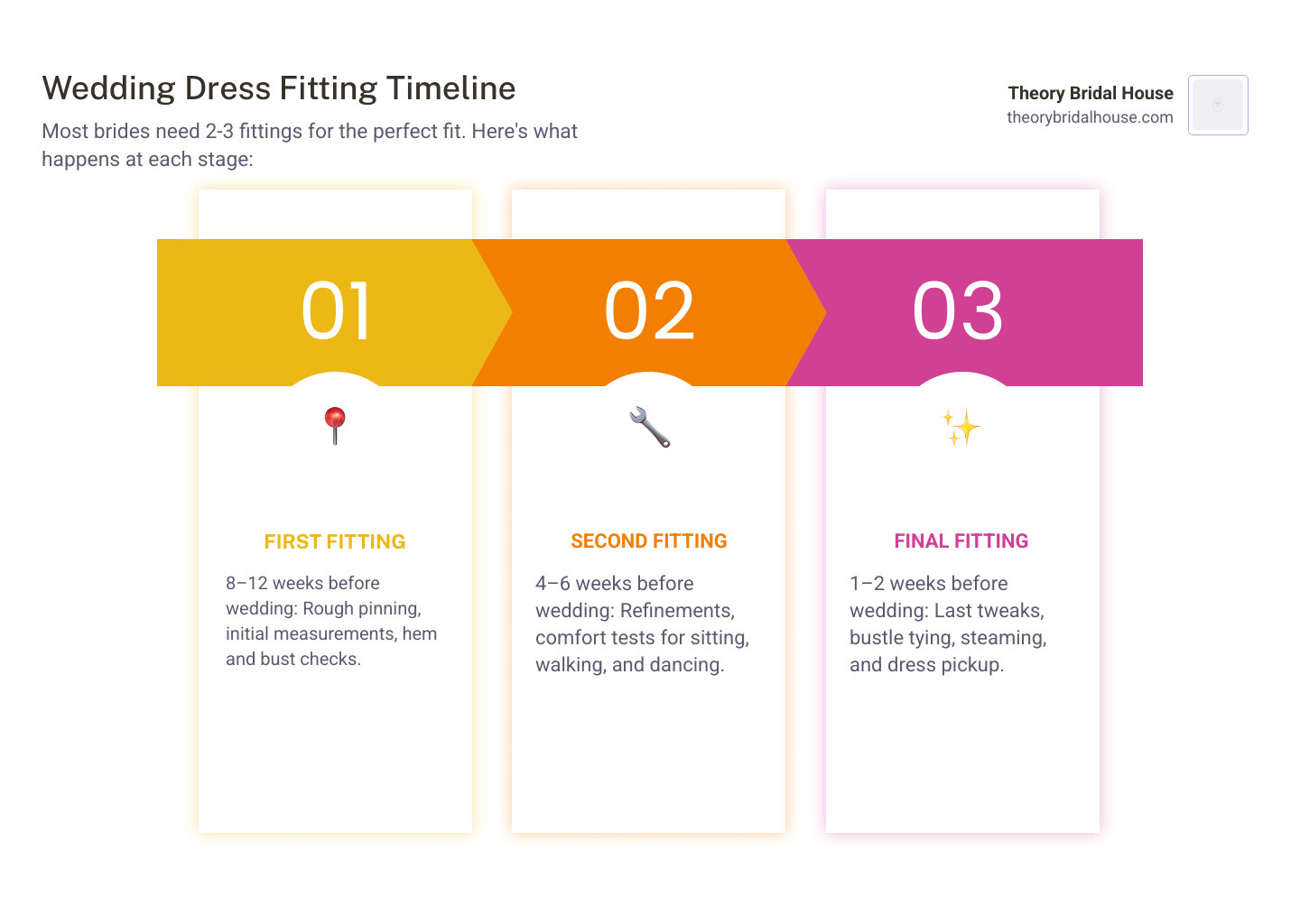
Most brides need 2 to 3 fittings, spaced out over 8 to 12 weeks before the wedding.
| Fitting | When | What Happens |
|---|---|---|
| First | 8–12 weeks before | Pinning, initial adjustments |
| Second | 4–6 weeks before | Refinements, comfort testing |
| Final | 1–2 weeks before | Last tweaks, bustle, pickup |
Nearly every wedding gown needs some adjustment. Standard sizing rarely matches your exact measurements. That means even a simple hem or a small change to the bodice requires at least one appointment — and often two or three.
The fitting timeline isn’t just about getting the dress to fit. It’s about making sure you can move, breathe, and feel like yourself on your wedding day.
I’m Brie Veliz, owner of Theory Bridal House in Orlando, and I’ve spent years helping brides navigate exactly how many wedding dress fittings they need through my background as a bridal stylist and boutique owner. Understanding this timeline is one of the most important steps I walk every bride through, and I’m here to make it simple for you.
How Many Wedding Dress Fittings Do Most Brides Need?
When you finally find “the one,” it feels like the hard part is over. But the journey from the showroom floor to the aisle involves a few more steps. On average, most brides require two to three fittings to achieve that ideal, second-skin fit. While that might sound like a lot of trips to the tailor, each appointment serves a very specific purpose in the construction and refinement of your look.
The number of sessions can fluctuate based on the complexity of your gown. A simple, clean-lined crepe dress might only need a quick hem and a strap adjustment, whereas a gown with ten layers of tulle and intricate hand-beading will naturally require more time under the needle. Furthermore, life happens—body changes or weight fluctuations can sometimes necessitate an extra “check-in” appointment to ensure the bodice remains secure and comfortable.
How many wedding dress fittings are typical for an off-the-rack gown?
Off-the-rack gowns are a fantastic way to find a beautiful dress quickly, but because they are made to standard sizing, they almost always require some expert attention. For these gowns, you are usually looking at the standard 2-3 fittings.
The primary focus for off-the-rack styles is typically the hemline and “bodice tweaks.” Since these dresses weren’t made to your specific height, the hem is almost always the first thing we look at. We also look at the bustle—the clever system of buttons or hooks that lifts your train off the ground so you can dance. Because off-the-rack gowns are built to a general size chart, we use these fittings to nip in the waist or adjust the bust so the dress looks like it was made just for you.
How many wedding dress fittings are needed for complex alterations?
If your dream dress involves a lot of “extras,” you should prepare for a potentially longer timeline and perhaps four or more fittings. Complexity often comes down to the architecture of the dress.
Major resizing—such as taking a dress down two full sizes—is a surgical process. Similarly, if you are adding custom sleeves, changing a neckline from a scoop to a deep V, or working with a corset back, the tailor has to rebuild parts of the garment. Delicate materials like fine lace or heavy beading also slow things down. Every time a seam is moved, beads must be removed and then hand-sewn back on to hide the transition. For these intricate projects, extra fittings are essential to ensure the structural integrity of the gown remains intact.
Why three fittings is the magic number
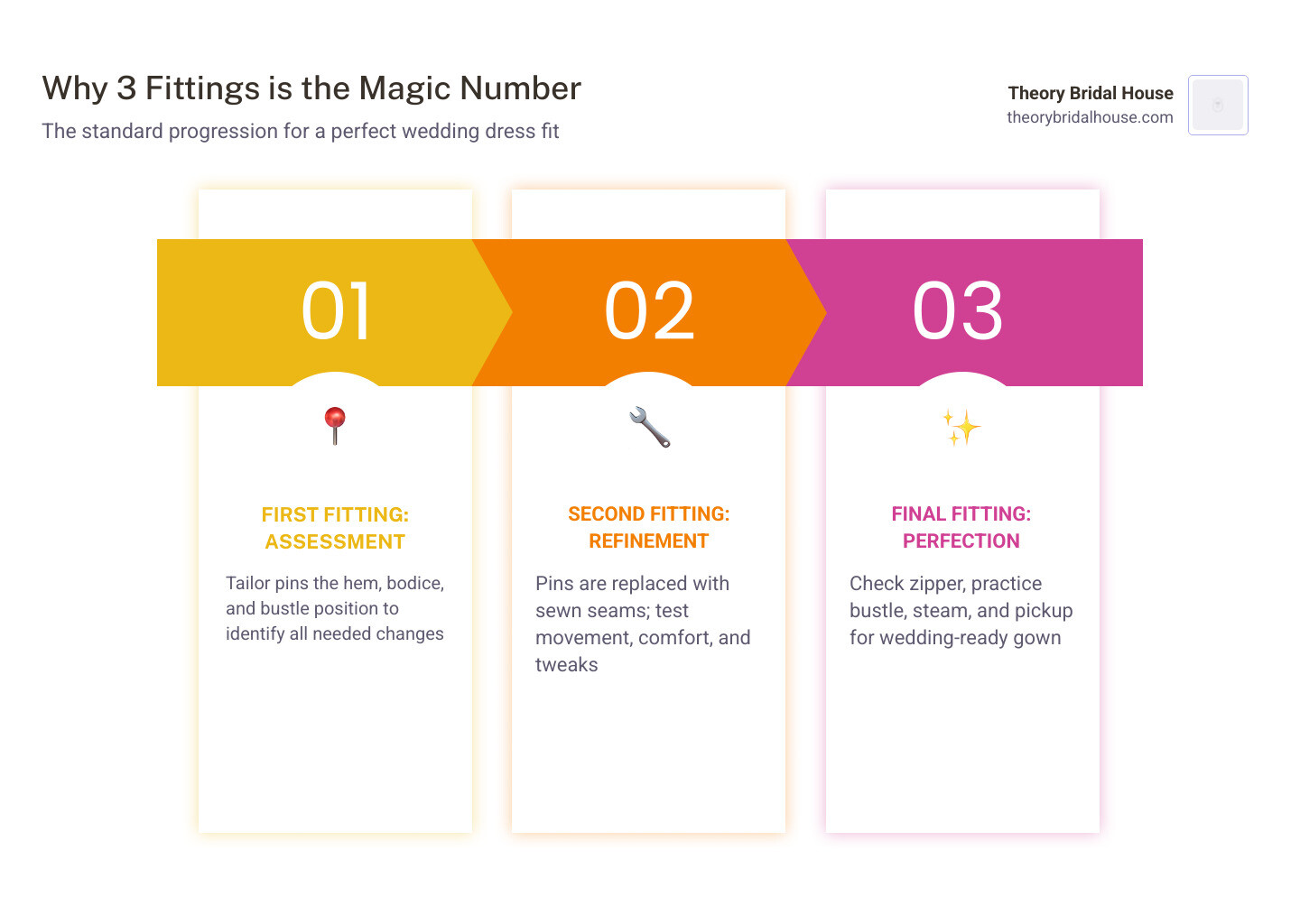
We often call three fittings the “magic number” because it follows a logical, stress-free progression.
- The First Fitting (The Assessment): This is where the heavy lifting happens. The tailor pins the hem, the bodice, and identifies where the bustle should sit.
- The Second Fitting (The Refinement): This is the most exciting part! You get to see the progress. The pins are gone, and the seams are sewn. We check the movement and make sure the “tweaks” from the first round were successful.
- The Final Fitting (The Perfection): This is the final reveal. We check the zipper, ensure the bustle is easy for your Maid of Honor to navigate, and give you that ultimate peace of mind.
Wedding Dress Alterations Timeline: What to Expect
Timing is everything in the wedding world. If you start too early, your body might change; if you start too late, you’ll be hit with rush fees and unnecessary stress. In our experience helping brides across Central Florida—from Orlando to Winter Park—we’ve found that the 8-to-12-week window is the sweet spot.
What happens at the first fitting?
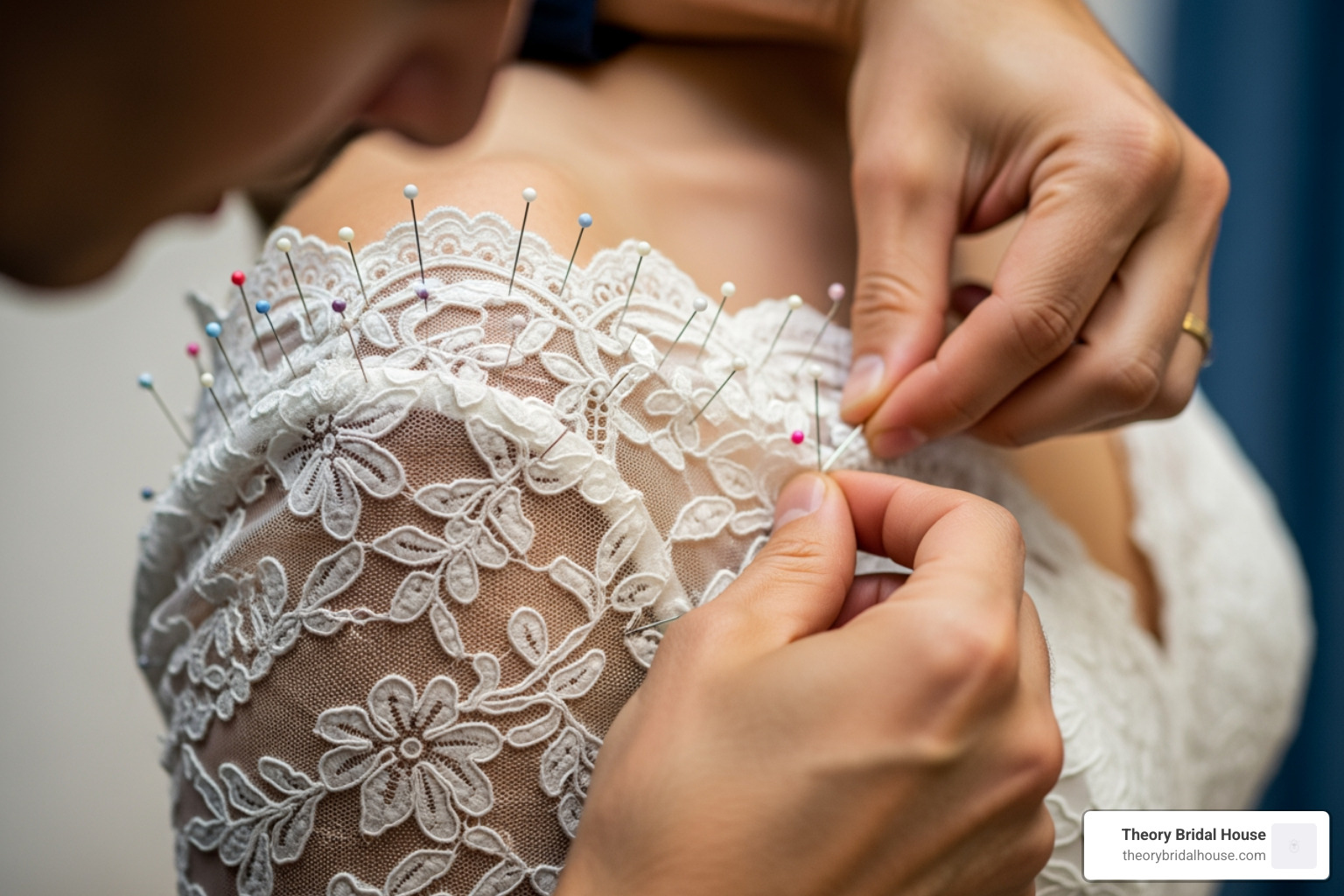
Your first fitting usually takes place 8 to 10 weeks before your big day. This is a working appointment. You’ll step into your dress, and the tailor will begin the “pinning” process.
The most critical elements addressed here are the hem height and the bust fit. This is why you must have your wedding shoes ready. Even a half-inch difference in heel height can throw off the entire hemline. The tailor will also check strap lengths and ensure the bodice is supporting you in all the right places. It’s normal for the dress to look a bit messy during this stage with pins sticking out everywhere—don’t worry, it’s all part of the process!
What happens at the second fitting?
Fast forward to 4 to 6 weeks before the wedding. At the second fitting, the major structural work should be complete. This is your “comfort test” appointment. We want you to do more than just stand still. We’ll ask you to walk, sit down, and maybe even bust out a few dance moves.
This is also when we finalize the bustle planning. We want to make sure the train drapes beautifully when pinned up. If you have your veil and jewelry, this is the perfect time to wear them to see the full “head-to-toe” look coming together.
What happens at the final fitting?
The final fitting occurs 1 to 2 weeks before you say “I do.” This is the “perfection” stage. We check the zipper one last time and ensure the bustle is functioning perfectly. Most importantly, this is often when the dress is professionally steamed and prepped for you to take home.
By this point, you should feel 100% confident in the fit. For more detailed insights on navigating this journey, check out this Guide to Wedding Dress Fittings.

What Affects How Many Wedding Dress Fittings You’ll Need?
No two gowns are created equal, and neither are the timelines for their adjustments. Several factors can influence whether you’ll be in and out in two visits or if you’ll need a few more.
- Fabric Type: Materials like silk chiffon or satin are slippery and delicate, requiring a slower, more precise touch than a sturdy mikado or lace.
- Beadwork and Lace Layers: As mentioned, these require hand-work. If a tailor has to move a side seam on a fully beaded gown, they have to meticulously remove and re-apply those beads.
- Train Length: A cathedral-length train requires a more complex bustle system than a floor-length gown, which may require an extra fitting to get the drape just right.
- Seasonality: If you are getting married during peak wedding season in Florida (think Spring and Fall), tailor availability might be tighter, making it even more important to stick to your scheduled appointments.
Simple vs complex alterations
It helps to understand the difference between a “tweak” and a “transformation.” Simple adjustments include things like shortening straps, replacing a zipper, or a basic hem. These are straightforward and rarely require more than two fittings.
Complex adjustments involve changing the actual design or size of the dress. This includes “letting out” a dress (if there is enough seam allowance), adding custom sleeves, or completely restructuring the interior boning for better support. These tasks are labor-intensive and require multiple checkpoints to ensure the dress remains balanced.
Body changes and weight fluctuations
We always tell our brides: your body is beautiful exactly as it is, but it is also prone to change! Stress, diet, and exercise routines during engagement can lead to weight loss or gain.
The key here is communication. If you notice your clothes fitting differently, tell your tailor early. We typically schedule the final fitting close to the wedding date (1-2 weeks out) specifically to account for minor fluctuations, ensuring the dress is snug and secure on the actual day.
Off-the-rack vs custom gowns
There is a common misconception that custom gowns don’t need fittings. While “made-to-measure” gowns are built closer to your proportions, they still require 1-2 fittings to account for the nuances of your posture and how you move. Off-the-rack gowns, conversely, are the “standard” starting point and almost always require the full 3-fitting journey to reach perfection. For a deeper dive into the nuances of these appointments, see Wedding Dress Fittings 101.
How to Prepare for Each Fitting So the Dress Fits Perfectly
To get the most out of your appointments, you need to come prepared. The tailor is working with fractions of an inch, so consistency is your best friend.
What to bring to every appointment
You should treat every fitting like a dress rehearsal. To ensure the measurements are accurate, you must bring:
- The Exact Shoes: The difference between a 3-inch heel and a 3.5-inch heel is enough to make you trip on your gown.
- Undergarments & Shapewear: The bra or shapewear you plan to wear will significantly change how the bodice sits.
- Accessories: Bring your veil, belt, or jewelry to see the complete vision.
- Inspiration Photos: If you are doing custom changes (like adding sleeves), bring photos to help the tailor visualize your goal.
What to do during the fitting
When you are on the pedestal, stand naturally. Don’t suck in or stand unnaturally stiff. You want the dress to fit the “real you” who will be hugging guests and eating cake.
Do the “Sit Test.” Can you sit comfortably without the boning poking your ribs? Do the “Walk Test.” Does the hem feel clear of your toes? If something feels itchy, tight, or loose, speak up! Your tailor wants you to be comfortable, and it is much easier to fix a concern at the second fitting than on the morning of your wedding.
How long fittings take and what alterations usually cost
Most fittings last between 30 and 60 minutes. The first is usually the longest, as it involves the most assessment.
In terms of investment, professional bridal work typically ranges from $150 to $700, depending on what needs to be done. We always recommend booking your appointments early to avoid “rush fees,” which can apply if you start the process less than 4-6 weeks before the wedding.
Frequently Asked Questions About How Many Wedding Dress Fittings
Can a wedding dress be taken in or let out?
Most professional gowns can be taken in quite easily—often up to two sizes. “Letting out” a dress is trickier and depends entirely on the “seam allowance” (the extra fabric left inside the seams). Most gowns allow for about an inch of wiggle room, but this varies by designer.
Are rush fees common if I start alterations late?
Yes. Tailors are artists with limited time. If you require a “rush service” during peak season, expect to pay a premium. Starting 2-3 months out is the best way to keep your experience stress-free and avoid extra costs.
Should I bring guests to my dress fittings?
We recommend keeping your group small—ideally just one or two trusted people, like your mom or your Maid of Honor. Too many opinions can become overwhelming and distract from your own vision. You want a calm environment where you can focus on how you feel in the dress.
Conclusion
Navigating how many wedding dress fittings you need doesn’t have to be a mystery. By planning for three appointments starting about two to three months before your date, you give yourself the gift of time and the assurance of a flawless fit.
At Theory Bridal House, we believe the fitting process should be just as joyful as finding the dress itself. Whether you are in Orlando, Lake Nona, or anywhere in Central Florida, our goal is to ensure you walk down the aisle with absolute confidence. Ready to start your journey to the perfect fit? Explore our services and book your appointment today!