

How to Nail Your Wedding Dress Fitting in 5 Easy Steps
What to Know Before Your Wedding Dress Fitting
Your wedding dress fitting is one of the most important appointments on your bridal checklist — and knowing what to expect makes all the difference.
Here’s a quick overview of the process:
- Book early — Schedule your fitting appointment 9 to 12 months before your wedding day.
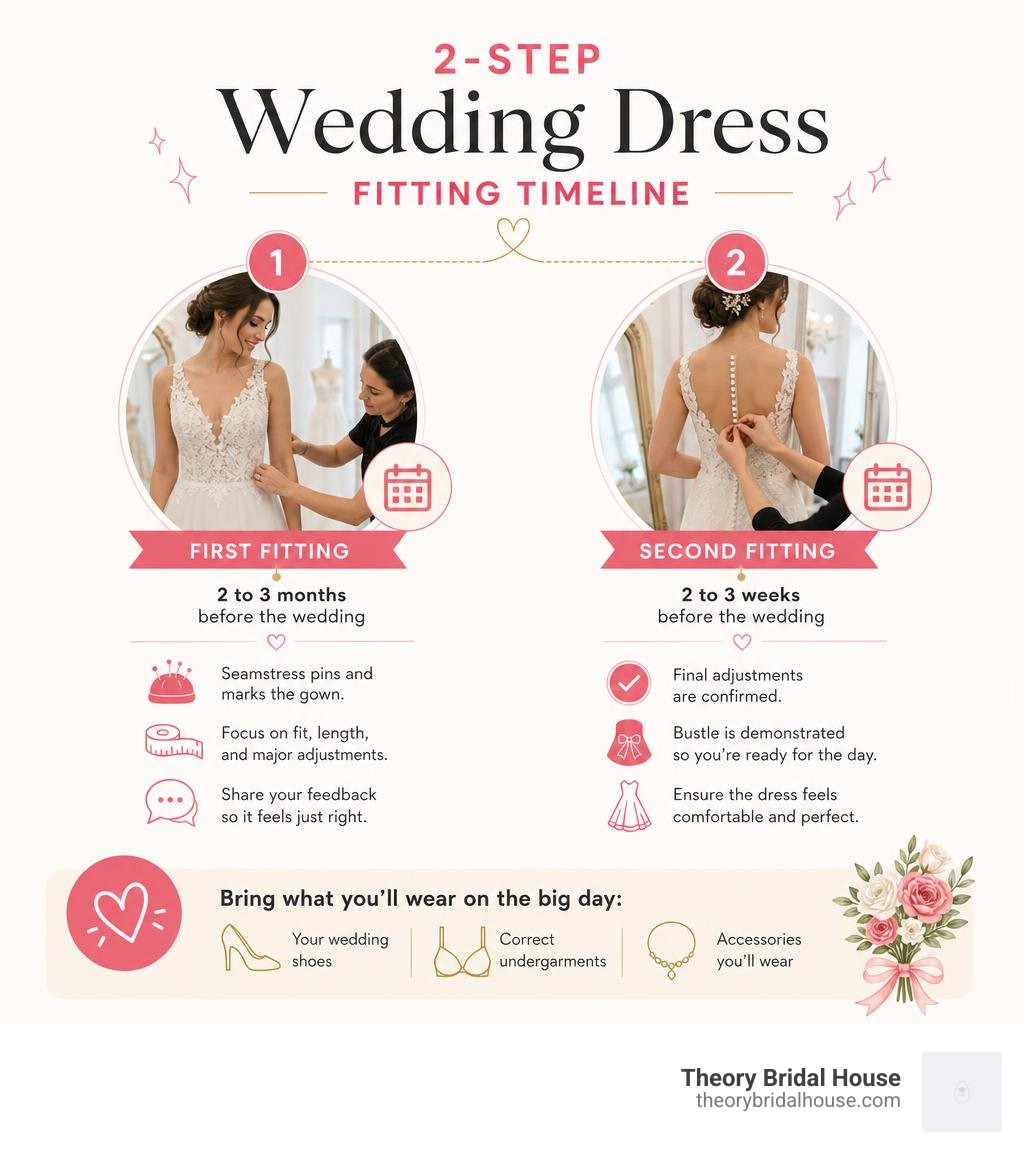
- First fitting — Takes place 2 to 3 months before the wedding. Your seamstress pins and marks the gown for adjustments.
- Second fitting — Takes place 2 to 3 weeks before the wedding. Final adjustments are confirmed and the bustle is demonstrated.
- Bring the right items — Your wedding shoes, correct undergarments, and any accessories you plan to wear.
- Speak up — Tell your seamstress exactly how you want the dress to feel. Too tight? Too loose? Say it.
Most brides need just two fittings to get their gown feeling perfect. The key is starting early and staying consistent.
Your dress won’t leave the boutique looking exactly like it did on the hanger. Almost every gown needs some adjusting — whether that’s the hem length, the bodice fit, or the way the back closes. That’s completely normal. It doesn’t mean anything is wrong. It just means the dress is becoming yours.
I’m Brie Veliz, owner of Theory Bridal House in Orlando, and I’ve spent years guiding brides through every stage of the wedding dress fitting process — first as a bridal stylist while studying at the University of Central Florida, and now running my own boutique. I want to walk you through exactly what to do so your fittings feel exciting, not stressful.
Discover more about wedding dress fitting:
Step 1: Book Your Appointment Early and Understand the Timeline
Timing is everything when it comes to securing the perfect fit. To ensure a stress-free experience, we recommend booking your initial fitting appointment at least 9 to 12 months in advance. This is especially crucial if your wedding falls during the peak Central Florida marriage seasons (typically the gorgeous, cooler months between October and April). During these busy times, skilled wedding gown specialists book up incredibly quickly.
By planning ahead, you give yourself and your tailor plenty of breathing room. Our structured process typically takes two fittings to achieve flawless results.
Here is how the ideal timeline breaks down:
- 9 to 12 Months Before: Book your fitting appointments to secure your spot with a trusted local expert.
- 2 to 3 Months Before (First Fitting): This is the foundation of your gown’s customization. Your seamstress will analyze the overall drape, pin the excess fabric, and map out the exact adjustments needed.
- 2 to 3 Weeks Before (Second Fitting): This is the final verification. You will try on the modified gown to ensure the bodice, hem, and bustle are absolutely perfect before taking it home.
Understanding this timeline helps you avoid last-minute rush fees and unnecessary stress. For a deeper dive into why structured timelines matter, you can read this Wedding Dress Timeline Explained.
Whether you are looking for gown personalization services in Orlando or exploring expert gown adjustments near Winter Park, starting early is the absolute golden rule.
Step 2: Bring the Right Essentials to Your Wedding Dress Fitting
What you wear underneath your gown is just as important as the gown itself. To get an accurate fit, you must maintain complete consistency in what you wear to each appointment. The foundation pieces you choose directly impact how the fabric sits against your skin, where the waistline falls, and how the hem grazes the floor.
Before you head out to your appointment, make sure you pack these non-negotiable essentials:
- Your Exact Wedding Shoes: A difference of even half an inch in heel height can completely throw off your hemline. If you switch from a three-inch stiletto to a flat sandal later on, your hem will drag and potentially catch on the floor.
- The Exact Undergarments: Bring the specific strapless bra, adhesive cups, or shapewear you plan to wear on the big day. If you plan to go braless, let your tailor know so they can sew cups directly into the bodice.
- Your Veil and Headpiece: Trying these on during your appointments helps you visualize the complete look and ensures the back details of your dress are not covered in an unflattering way.
To learn more about what actually happens during these hands-on sessions, read about What Does Gown Fitting Meaning Actually Entail? and prepare yourself for a smooth experience.
Step 3: Master the Art of Movement and Comfort
When you are standing on the pedestal in front of a mirror, it is easy to stand perfectly straight like a mannequin. But your wedding day is not a static photo shoot. You will be walking down the aisle, sitting for dinner, raising a glass for toasts, hugging your loved ones, and dancing the night away.
Your wedding dress fitting is your ultimate “test drive.” To ensure your gown is comfortable for a celebration that can easily last 8 to 12 hours, you must perform several active mobility tests during your appointment:
- The Sit Test: Sit down in a chair. Does the bodice dig into your ribs? Is the fabric around your hips so tight that you can’t breathe comfortably?
- The Hug Test: Raise your arms and wrap them around a loved one. If you have delicate lace sleeves or off-the-shoulder straps, make sure they allow enough range of motion so you don’t pop a seam when hugging guests.
- The Dance Test: Sway from side to side, lift your feet, and mimic a few dance moves. This ensures your skirt moves beautifully with you.
A perfect fit is a balance between beautiful aesthetics and practical comfort. For more expert tips on navigating your first appointment with confidence, check out our guide on Gown Fitting 101: How to Survive Your First Consultation.
Step 4: Communicate Clearly with Your Seamstress
Your seamstress is your partner in creating your dream look, but they cannot read your mind. Clear, honest, and polite communication is essential to getting the results you want. If something feels too tight, rubs against your skin uncomfortably, or doesn’t look the way you envisioned, speak up immediately. It is much easier to make adjustments while the dress is pinned than it is after the final seams are sewn.
Here are a few practical ways to communicate effectively during your wedding dress fitting:
- Use Visuals: If you want to modify a neckline or add delicate straps, bring reference photos to show your tailor exactly what you mean.
- Describe the Sensation: Instead of just saying “this feels weird,” try to be specific. Say “the boning is pinching my left rib” or “the straps feel like they are slipping when I walk.”
- Understand the Bustle: Gowns with trains require a bustle to lift the fabric off the floor for your reception. Bustles can range from simple 3-point designs to highly intricate 11-point French bustles. Ask your seamstress to explain the mechanics clearly so your wedding day helper knows exactly how to secure it.
For a comprehensive look at what to discuss during your appointments, take a look at our Wedding Gown Fittings Guide 2026.
Step 5: Prepare for the Final Reveal and Pickup
The second fitting, which takes place 2 to 3 weeks before your wedding day, is a highly anticipated milestone. This is where all the hard work comes together, and you finally see the gown fully adjusted to your unique measurements.
During this appointment, you will do a final try-on to confirm that every adjustment is flawless. It is also the perfect time to have your designated helper (such as your maid of honor or a close family member) join you to learn how to bustle the dress. We highly recommend taking a quick video of the seamstress demonstrating the bustle process so you have a step-by-step reference guide on the wedding day.
To help you understand how these two appointments differ, we have put together this comparison:
| Feature | First Fitting (2 to 3 Months Before) | Second Fitting (2 to 3 Weeks Before) |
|---|---|---|
| Primary Goal | Pinning, marking, and mapping out structural changes. | Verifying final fit, adjusting the hem, and finalizing details. |
| Focus Areas | Bodice fit, strap length, and initial hem outline. | Bustle functionality, comfort during movement, and final tweaks. |
| Gown Appearance | Often looks unfinished, with visible pins, clips, and loose threads. | Looks complete, clean, and perfectly tailored to your shape. |
| Who to Bring | A calm, supportive confidant to share the experience. | The person who will help you dress and bustle your gown. |
Once you are completely satisfied with the fit, your gown will be professionally pressed and packed. When you take it home, keep it stored safely in a breathable garment bag away from direct sunlight, moisture, and curious pets until it is time to put it on.
Frequently Asked Questions
What should I do if my weight changes before my wedding dress fitting?
Minor weight fluctuations of 5 to 10 pounds are completely normal and easily accommodated by professional tailors. The most important thing is to be honest with your seamstress about your body goals. We strongly encourage focusing on how the dress feels rather than trying to fit into an aspirational size. A gown tailored to your actual measurements on the day of your fitting will always look more stunning and photograph better than one that is uncomfortably tight.
Who should I bring to my wedding dress fitting?
We highly recommend keeping your guest list small—ideally just one or two trusted, calm individuals. While it is tempting to make it a large group outing, too many opinions can quickly become overwhelming and distract you from focusing on your own comfort. Bring someone who respects your vision and, ideally, the person who will be helping you bustle the dress on the wedding day.
How long does a typical appointment last?
A typical fitting appointment lasts between 30 to 60 minutes. The first fitting is usually the longest because it involves detailed pinning and structural planning. The second fitting is typically quicker, as it is focused on verifying the final adjustments and practicing the bustle. Be sure to arrive on time and avoid scheduling tight plans immediately afterward so you do not feel rushed.
Conclusion
Nailing your wedding dress fitting is all about preparation, timing, and clear communication. By booking your appointment early, staying consistent with your footwear and undergarments, and speaking up about your comfort, you can ensure that your walk down the aisle is as comfortable as it is beautiful.
At Theory Bridal House, located in the heart of Downtown Avalon Park in Orlando, Florida, we specialize in offering personalized, intimate shopping and fitting experiences. We invite brides from all over Central Florida—including Lake Nona, Ocoee, Oviedo, Sanford, Clermont, Lakeland, and Maitland—to step into our cozy space, enjoy a refreshing mimosa, and experience the luxury of our private fitting rooms.
If you are ready to begin your journey to a flawless fit, read our guide on Say Yes to the Dress: Why You Need a Private Fitting Appointment and explore our Real Brides Gallery to see how we help local brides bring their wedding day visions to life.
We look forward to celebrating with you!